TL;DR
- Neither in-house nor outsourced modernization automatically frees up developer time, the hours just move. Outsourcing looks like it removes the comprehension burden, but knowledge transfer and quality oversight still fall on the same internal people.
- Developers already spend 42 percent of a 41-hour work week on maintenance and bad code before any modernization program starts. Stripe’s Developer Coefficient report found 13.5 of those 17.3 hours go to technical debt specifically.
- In-house modernization tends to fail through concentration, outsourced modernization through context loss. One specialist leaving an in-house team can strip the ability to safely change an application, while vendor staff rotation mid-program forces business logic to be relearned.
- Comprehend is where most hours go under either model, and it’s the phase most comparisons skip. A vendor still needs internal experts to brief them on what’s fragile and undocumented, so even well-run engagements typically pair a consultant with an internal engineer.
- Legacyleap isn’t a third bucket, it changes what either the in-house or outsourced column can deliver. Its Assessment and Documentation agents absorb the comprehension draw without developer interviews, while the Modernization Agent automates roughly 70 percent of the transformation work.
Comparing Modernization Models by Cost and Control Misses the Real Variable
In-house vs. outsourced software modernization gets compared on cost and control by default. Neither dimension explains why one program frees up engineering capacity, and another burns through a budget without ever getting developers back on their own roadmap.
Neither model automatically frees up developer time. What determines the outcome is which one removes the comprehension burden, the work of understanding what an undocumented legacy system does, rather than which name sits on the org chart. In-house modernization ties that burden directly to your own developers, in the coding itself. Traditional outsourcing looks like it removes the burden, but knowledge transfer, quality oversight, and answering a vendor’s questions about undocumented business logic still fall on the same people.
The hours move. They do not disappear.
This piece compares in-house and outsourced legacy modernization the way the decision plays out, phase by phase across the full modernization lifecycle, not as a single choice made once and then forgotten.
In-House and Outsourced Software Modernization: What Each Term Covers
“In-house” is straightforward: your existing engineering staff, or new hires added to it, executes the modernization directly. “Outsourced” covers more ground than most comparisons admit.
A nearshore staff-augmentation pod, a fixed-scope systems integrator engagement, and a governed platform-run engagement all get called “outsourcing,” and they have very different developer-hours profiles even though they share a label. This same comparison is often searched as in-house vs. outsourced legacy migration, particularly when the conversation is about moving one specific system rather than a broader modernization program.
That difference is the reason a simple two-column comparison undersells the decision. The table below adds a third column for how a governed AI platform changes the picture, whether it is run by your own team or by a partner.
| In-House | Traditional Outsourcing | Legacyleap-Run Engagement | |
| Who writes the code | Your developers | Vendor’s developers | Modernization Agent, human-reviewed |
| Who signs off on quality | Your team | Shared, often disputed at handoff | QA Agent parity validation, your team approves |
| What happens to institutional knowledge | Stays with existing staff, at risk if they leave | Has to be transferred to the vendor, then transferred back | Extracted from the codebase itself, not from interviews |
| Typical cost profile | Higher, front-loaded (salaries, benefits, ramp) | Lower per hour, variable with scope | Fixed-scope assessment, then a defined engagement |
| Typical developer-hours draw | High, concentrated in Modernize | Reduced, but concentrated in Comprehend and oversight | Lowest at Comprehend, shifted to review and decisions in Modernize |
In-House vs. Outsourced Modernization, Phase by Phase: Where Developer Time Goes
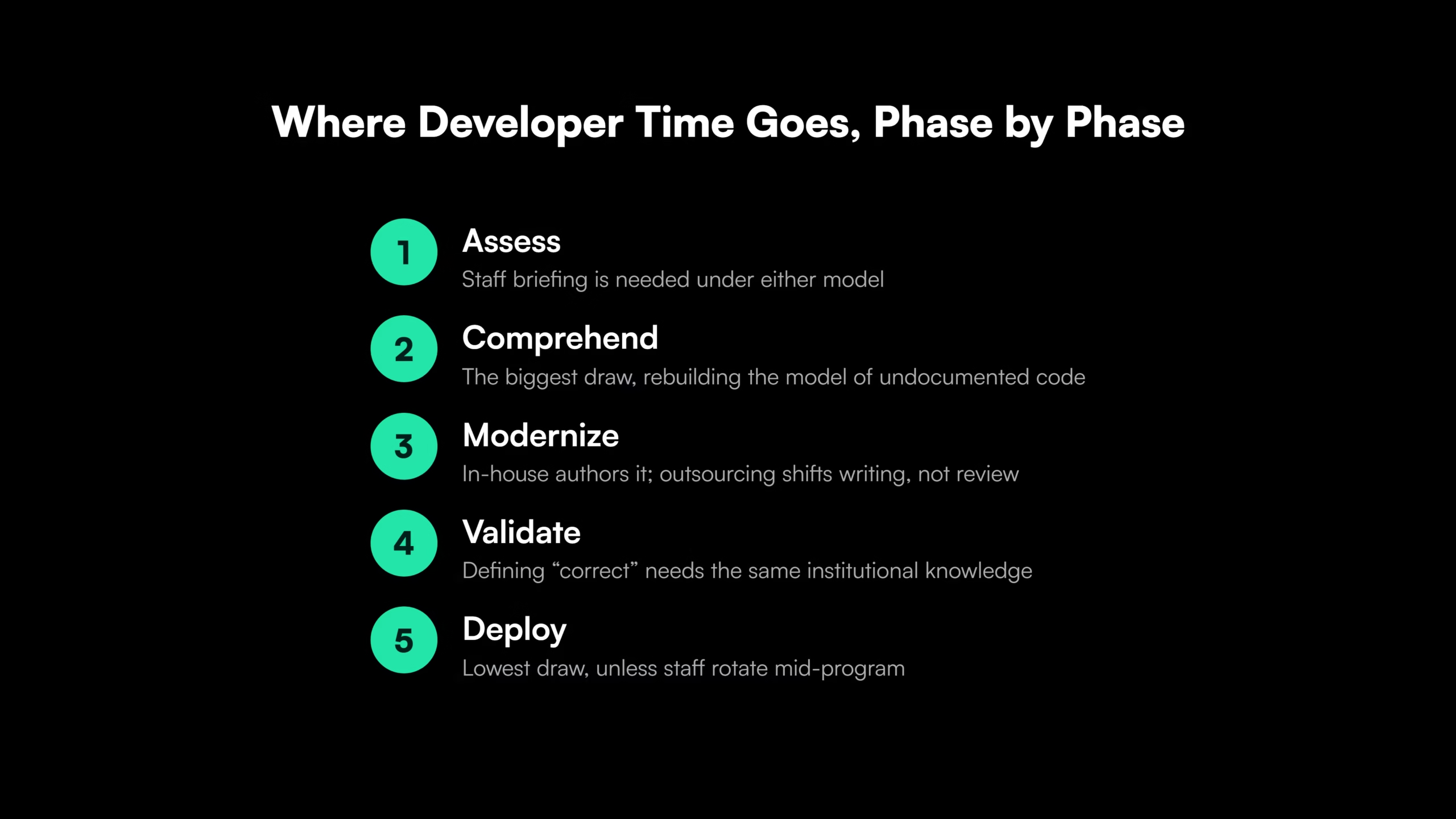
The modernization lifecycle runs Assess, Comprehend, Modernize, Validate, and Deploy, regardless of who executes it. Each phase draws on developer time differently under each model.
Assess
In-house teams run this with existing staff pulled off their current roadmap, since nobody else knows where to look. Outsourcing does not remove this step. A vendor still needs internal subject-matter experts to brief them on what exists, what is fragile, and what has no documentation at all before an assessment means anything.
Comprehend
This is where most of the hours go, under either model. Stripe’s Developer Coefficient report surveyed more than 1,000 developers and found they spend 17.3 hours of a 41.1-hour work week, 42%, on maintenance and bad code [1]. Of those hours, 13.5 go to technical debt specifically, time that is already being spent before anyone chooses a modernization model.
In-house developers rebuild their own mental model of the system, time they already carry as a cost, just one that never shows up as a modernization line item. Outsourcing requires transferring that same understanding to people who do not have it yet. The developers who understand the system spend real hours answering questions, checking vendor documentation for accuracy, and correcting misreadings of business logic that was never written down.
Even well-run engagements are typically structured to pair an outside consultant with an internal engineer for exactly this reason. That kind of pairing is a direct admission that the internal time cost never reaches zero.
Modernize
In-house developers write the code directly, the fullest draw of any phase. Outsourcing shifts the writing, not the review. Someone with system context still has to evaluate whether the vendor’s output is correct, especially anywhere the original business logic was undocumented.
Validate
Parity checking against a system nobody fully documented requires the same institutional knowledge either model needs, applied here to defining what correct behavior looks like before a test can confirm it.
Deploy
The lowest developer-hours draw in both models, with one exception. If a vendor rotates staff mid-program, or an internal team loses a key person, the comprehension cost from earlier in the lifecycle effectively gets paid again.
| Phase | In-House Draw | Traditional Outsourcing Draw |
| Assess | High | Medium (briefing the vendor) |
| Comprehend | High | Medium-High (knowledge transfer, review) |
| Modernize | High | Medium (review, not authorship) |
| Validate | Medium-High | Medium-High (defining “correct”) |
| Deploy | Low | Low, unless staff rotate |
Legacy-stack hiring makes the in-house side of this table worse over time, not better. Recruitment for legacy skills has been getting more expensive as demand outpaces the shrinking supply of people who know these stacks. That scarcity is part of why the Assess and Modernize rows stay high for in-house teams rather than easing as the program matures.



The Failure Patterns Behind In-House and Outsourced Modernization
A comparison that only lists what each model does well is not a comparison. Both paths have specific, well-documented ways of failing, and they are not the same failure.
In-house modernization tends to fail through concentration, not effort:
- The one specialist who understands the system leaves, and the organization does not just lose a team member; it loses the ability to safely change the application at all
- Legacy-stack hiring timelines stretch out as the talent pool for older frameworks keeps shrinking, so gaps take longer to close the longer a system has been left alone
- Developers get pulled off the product roadmap for the duration of the program; the capacity cost this whole comparison is about
Outsourced modernization tends to fail through context loss:
- Vendor or internal staff rotation mid-program forces business logic to be relearned, burning budget and timeline a stable team would not have spent
- Time-and-materials engagements can shift the financial risk of scope creep back onto the client rather than the vendor, especially where discovery was shallow at the start
- A modernized system only holds value if the client’s own team can operate it afterward, so even a well-run engagement has to plan for transferring knowledge back, not just out
Big-bang rewrites make both failure patterns worse, regardless of which executor runs them. A single, monolithic cutover concentrates all the comprehension risk into one irreversible event, where phased, incremental modernization lets a team catch a wrong assumption about business logic before it compounds across an entire system.
Not Sure In-House Or Outsourced Is Right?
Book a Technical Demo and walk through how a governed, agent-executed modernization program avoids the rotation and context-loss patterns above, before you commit to either model.
Where Legacyleap Fits Between In-House and Outsourced Modernization
Legacyleap is not a third bucket sitting outside this comparison. It is a Gen AI-powered legacy modernization platform, built on multi-agent orchestration, that changes what either the in-house or the outsourced column can deliver.
The Five Agents, Mapped to the Lifecycle Above
The Assessment Agent and Documentation Agent absorb the Assess and Comprehend draw without developer interviews. Working from full-codebase grounding and a persistent meta-cognitive model of the whole estate, they reconstruct architecture, dependencies, and business logic directly from the code. That produces the same documentation a knowledge-transfer process would otherwise require developers to narrate by hand.
The Modernization Agent produces diff-based, human-reviewed pull requests, so developer time in the Modernize phase shifts to review and decisions rather than authorship, with roughly 70% of the transformation effort automated. The QA Agent auto-generates parity validation across unit, integration, regression, and functional test cases. Validate no longer requires rebuilding test coverage by hand before anyone can confirm the system still behaves the way it did.
This is the same agentic AI modernization approach across every phase, agents executing under human review, not merely assisting.
Turnkey and Platform Licensing, on the In-House and Outsourced Axis
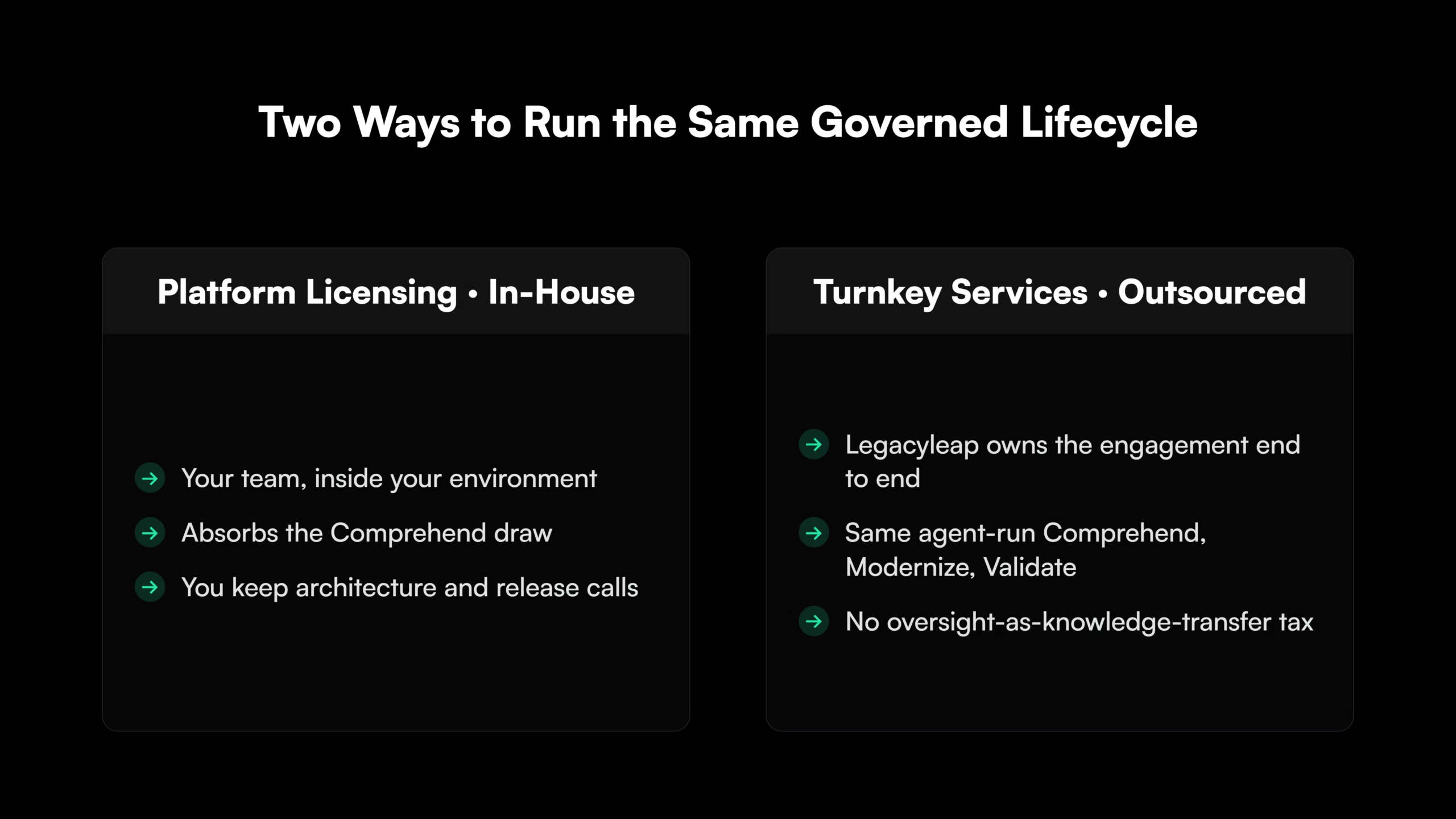
Platform Licensing is the in-house column, run with the client’s own team, deployed inside their environment. The team’s time goes to the decisions the platform cannot make, architecture calls, business-logic judgment, release approval, rather than to the comprehension work it can.
Turnkey Modernization Services is the outsourced column. Legacyleap’s team owns the engagement end to end, but the lifecycle underneath is the same agent-executed process, not a body shop billing time and materials. The client’s developers are freed from oversight-as-knowledge-transfer, the actual driver of the outsourcing tax described above, not just from typing code.
How Persistent, Whole-Estate Context Differs From a Copilot
A copilot or IDE plugin works from whatever files are open in a session. Legacyleap’s context persists across the whole estate, the specific reason the Comprehend draw does not require developer interviews in the first place. That persistent context is routed and validated through Legacyleap’s AI gateway, rather than left to an unmanaged, per-session API call.
That distinction has real stakes. Gartner predicts over 40% of agentic AI projects will be canceled by the end of 2027, citing escalating costs, unclear business value, and inadequate risk controls [2]. Governed, diff-based automation with human review at every step is what keeps a modernization program on the right side of that prediction, not AI-assisted speed by itself.
All Legacyleap processing runs inside the client’s own infrastructure. No source code leaves the client’s environment, and no code merges, deploys, or executes without a human reviewing it first.
Choosing Between In-House and Outsourced Modernization
Comparing in-house and outsourced modernization phase by phase, rather than as one blanket choice, shows which model gives developers their time back, and which one relocates the same hours somewhere less visible.
A $0 Modernization Assessment maps this for your specific codebase in 2 to 5 days, at no cost and no obligation, before you commit to either model. Book a Technical Demo if you want to see how the underlying agents work first.
FAQs
It reduces the developer-hours draw, but knowledge transfer and quality oversight still require the people who understand the system. Outsourcing relocates hours more than it removes them.
Neither wins by default. The better model is whichever one removes the comprehension burden for your specific codebase, a phase-by-phase question, not a single answer.
Yes. Platform Licensing runs with your own team inside your environment, and Turnkey Modernization Services hands the engagement to an outside team, both using the same governed lifecycle underneath.
Developers already spend 42% of a typical work week on maintenance and technical debt before any modernization program starts, per Stripe’s Developer Coefficient report. Comprehend is usually where the largest additional draw falls.
References
[1] Stripe, “The Developer Coefficient,” September 2018. https://stripe.com/files/reports/the-developer-coefficient.pdf
[2] Gartner, “Gartner Predicts Over 40% of Agentic AI Projects Will Be Canceled by End of 2027,” press release, June 25, 2025. https://www.gartner.com/en/newsroom/press-releases/2025-06-25-gartner-predicts-over-40-percent-of-agentic-ai-projects-will-be-canceled-by-end-of-2027