TL;DR
- 82 percent of enterprises claim a clear data strategy; only 27 percent have actually integrated the data behind it. That 55-point gap is close to the full explanation for why AI initiatives stall after a confident roadmap and a promising pilot.
- Failed enterprise AI projects cost an average of $7.2 million, and most of that is a data problem wearing an AI label. Gartner found 63 percent of organizations lack, or aren’t sure they have, proper data-management practices for AI.
- A written data strategy can claim central governance while the ETL jobs enforcing it were written before the policy existed. Legacy platforms like Ab Initio, SSIS, and Informatica typically deliver data in scheduled batches, not the near-real-time access most AI applications need.
- Only 28 percent of AI use cases fully meet ROI expectations, and 38 percent of failures trace to poor data quality. Separately, 61 percent of data leaders name improved data quality as the critical factor for moving a pilot into production.
- The fix is sequencing: modernization has to be a gate the AI program clears, not a track running beside it. Legacyleap’s five agents assess and document a pipeline in 2-5 days and validate functional parity before it ever reaches an AI-consuming system.
82% of Enterprises Claim an AI-Ready Data Strategy. Only 27% Have One.
Eighty-two percent of enterprises say they have a clear data strategy. Twenty-seven percent have actually integrated the data sources that strategy depends on [1]. That fifty-five-point gap is close to the whole explanation for why so many AI initiatives stall after a promising pilot and a confident roadmap. An AI-ready data strategy on paper and an AI-ready data strategy in production are frequently two different things.
AI projects fail to deliver intended business value at a rate of roughly 80%, and the average failed enterprise AI project costs an estimated $7.2 million [2]. Those figures get filed under “AI problem.” Most of the time they are a data problem wearing an AI label.
This article covers the specific mechanism behind the gap: why a written AI-ready data strategy so rarely matches the infrastructure underneath it, why the mismatch traces back to legacy systems more often than to policy, and what sequencing has to change to close it.
What an AI-Ready Data Strategy Actually Requires
An AI strategy depends on data modernization because AI systems can only act on data they can reach, trust, and interpret automatically, and in most enterprises that data still lives inside undocumented legacy applications, batch-only pipelines, and siloed warehouses that were never built for machine-readable or real-time access. Data modernization is the mechanism that closes that gap. Skipping it does not make an AI initiative faster. It moves the point of failure downstream, from the data team to the AI team.
Gartner has found that 63% of organizations lack, or are unsure whether they have, proper data-management practices for AI, and projects that 60% of AI initiatives will be abandoned through 2026 without AI-ready data [3].
A written data strategy typically covers ownership, governance policy, and a tooling roadmap. Enterprise data readiness for AI requires something more specific: data that is fresh enough to be current when a model queries it, consistent enough across systems to be trusted, governed in motion rather than only at rest, and structured so a machine can act on it without a person translating it first. A policy document can describe all four qualities. It cannot produce them on its own.
Legacy System Data Migration: The Root Cause of the AI Readiness Gap
The disconnect between a data strategy and the infrastructure underneath it almost always traces back to the same place. Legacy ETL platforms and warehouses were built for scheduled batch reporting. They were not built to feed AI systems in anything close to real time. Ab Initio jobs, SSIS packages, and Informatica workflows written a decade or more ago typically have no documented lineage from source system to output, and moving those specific pipelines to modern ELT patterns is its own execution discipline. Nobody currently on staff can say with confidence what a given AI system is actually being fed, or why.
The table below shows where a typical written data strategy and the infrastructure reality tend to diverge.
| What the strategy claims | What the legacy infrastructure actually delivers |
| “Our data is centrally governed” | Governance policy exists on paper; the ETL jobs enforcing it were written before the policy and were never updated |
| “Our data is accessible for AI use cases” | Data is accessible in scheduled batches, not on the continuous or near-real-time basis most AI applications need |
| “We have lineage and documentation” | Lineage exists only in the heads of the two or three engineers who have worked on the pipeline the longest |
| “Our data quality is monitored” | Quality is checked at ingestion into the warehouse, not at the point an AI system actually consumes it |
Closing that gap is a migration and modernization problem before it is anything else. Closing the execution gap between legacy pipelines and AI-ready infrastructure is a different exercise than writing a better governance policy, and it is where most AI-readiness plans stop short.
The data debt that compounds with every AI initiative built on top of it does not announce itself until an AI system is already in production and someone asks why its output does not match what the source system actually contains. Regulatory pressure is adding to this: the EU AI Act’s data-governance obligations for high-risk systems are now in force, and they require exactly the kind of lineage and documentation most legacy pipelines were never built to produce.
Six Signs Your Data Foundation Isn’t AI-Ready
A short, honest checklist tends to reveal the gap faster than another round of strategy documents:
- Nobody on the current team can fully explain what a given ETL job does or why it was written that way
- Data reaches AI systems on a batch schedule, not on the continuous basis the use case actually needs
- There is no documented path from source system to the dataset an AI model or agent consumes
- Data quality issues are discovered after a model is already in production, not before
- A data strategy document exists, but no corresponding infrastructure roadmap sits behind it
- Nobody has actually mapped which legacy systems feed which AI initiatives
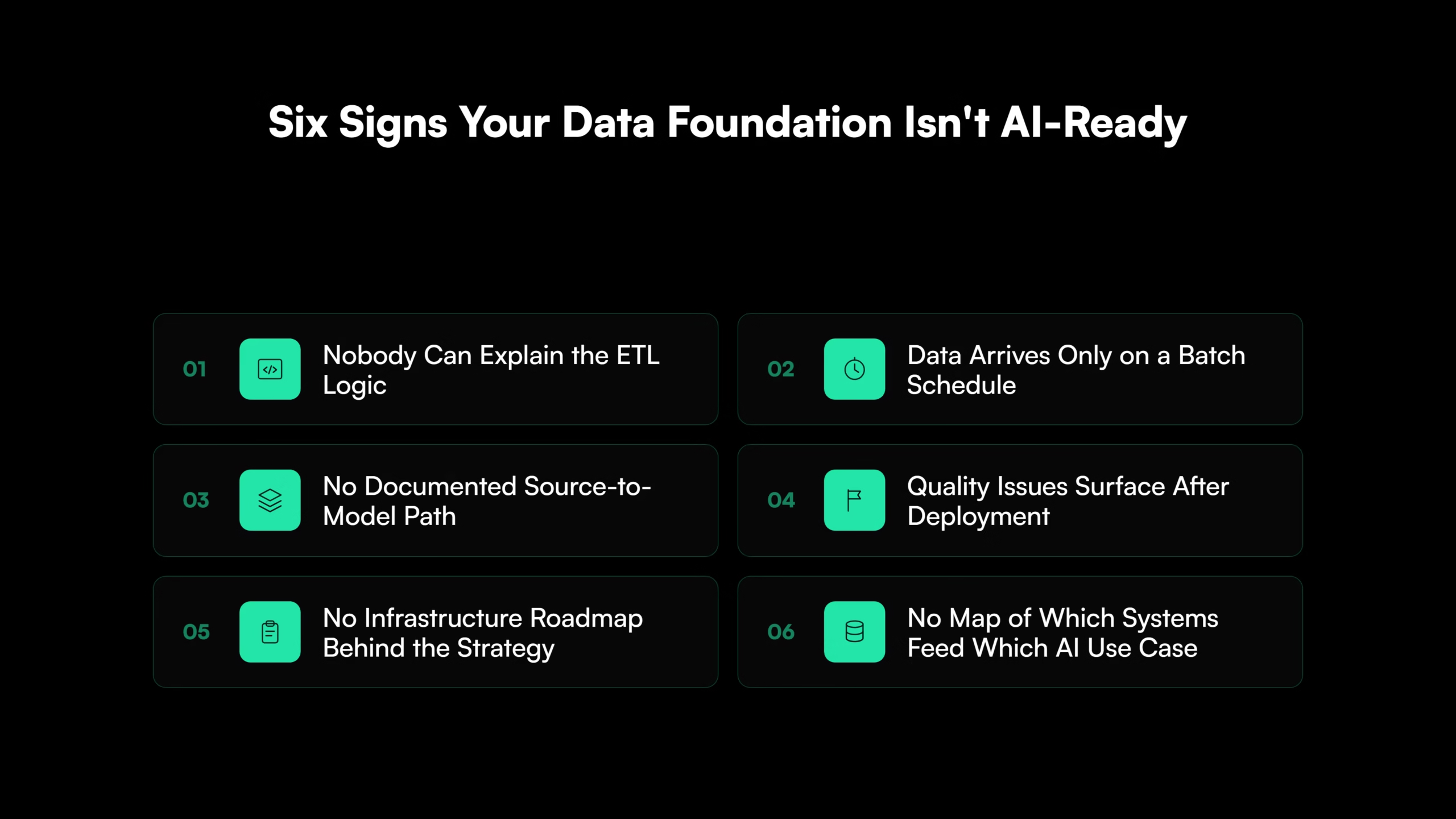
Two or more of these being true is a reliable sign the strategy and the infrastructure have not been reconciled.



Data Modernization Must Precede AI Pilots, Not Run Alongside Them
Data modernization is happening in most AI programs, but the timing is off. It runs alongside the AI pilot rather than ahead of it, and that ordering choice is where a large share of AI initiatives actually die. Gartner’s own survey of infrastructure and operations leaders found only 28% of AI use cases fully succeed and meet ROI expectations, and 38% of reported failures trace to poor data quality or limited data availability [4].
Separately, 61% of data leaders name improved data quality as the critical factor in moving an AI pilot into production, and 50% cite data quality or retrieval problems as the top barrier specifically for agentic AI deployment [5].
Even well-governed agentic AI programs are not exempt from this pattern. Governance without a reachable, trustworthy data layer underneath it still fails. It just fails later and more expensively.
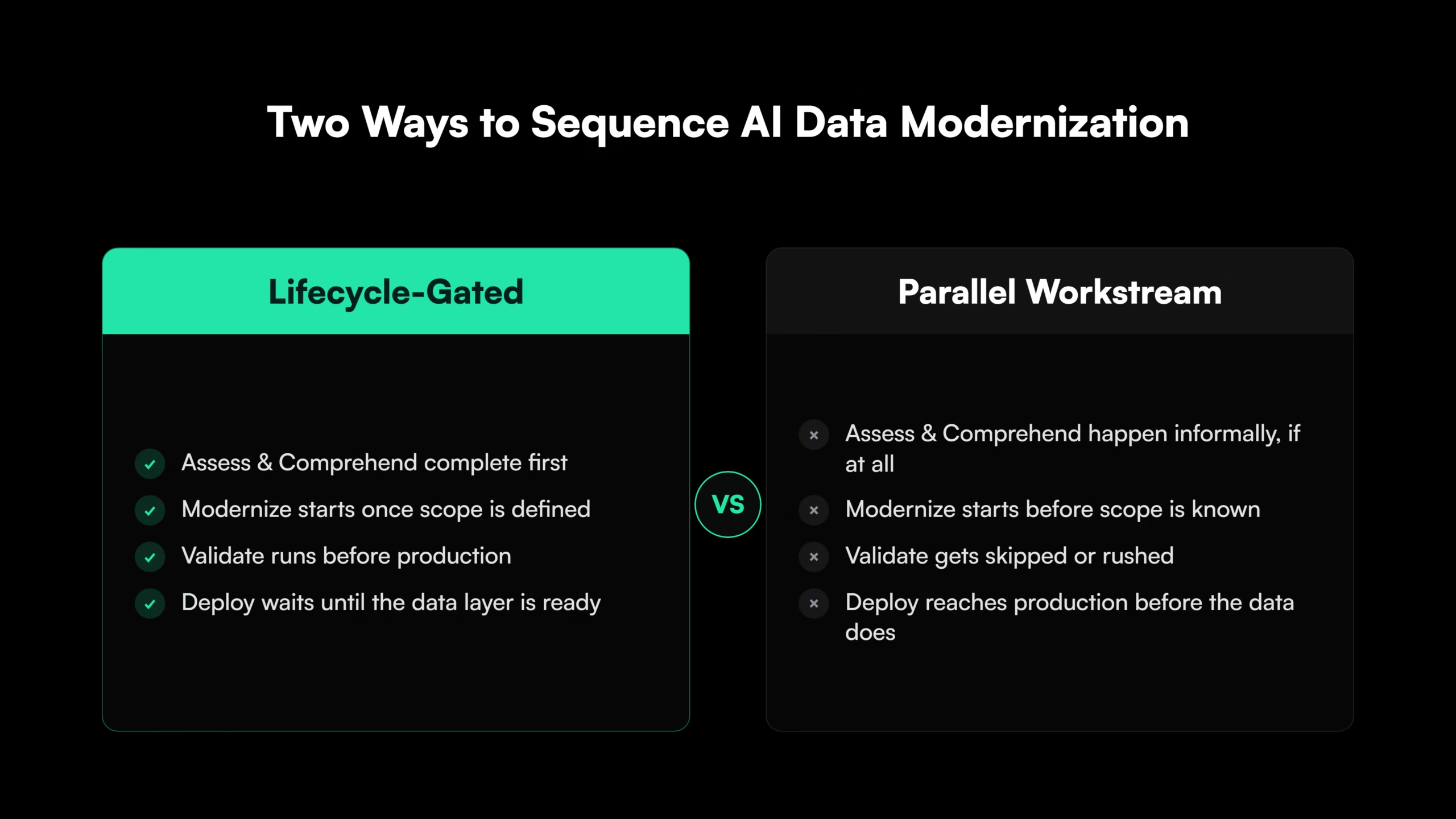
| Lifecycle stage | Run in parallel with the AI pilot | Run as a prerequisite gate |
| Assess / Comprehend | Happens informally, if at all, while the pilot is already underway | Completes first, producing a real map of what the legacy data layer contains |
| Modernize | Starts before anyone knows what needs to change | Starts only once the assessment defines the actual scope |
| Validate | Skipped or rushed to hit the pilot’s demo date | Runs before the AI system goes anywhere near production data |
| Deploy | The AI system reaches production before the data layer does | The AI system reaches production only after the data layer is confirmed ready |
The fix is not more effort. It is sequencing: treating data modernization as a phase the AI program has to clear, not a track running next to it.
Is Your Data Layer Really AI-Ready?
Book a Technical Demo and see how Legacyleap’s five agents sequence comprehension, modernization, and validation for a legacy data layer, so your production date is set by real readiness, not a project plan’s optimism.
How Legacyleap’s Five Agents Execute Data Modernization for AI Readiness
The sequencing argument above only matters if the lifecycle it describes can actually be executed, not just planned. Legacyleap’s five agents map directly onto it. The Assessment Agent and Documentation Agent handle Assess and Comprehend, producing a dependency map, risk indicators, and reconstructed lineage and business logic for a legacy data pipeline in 2 to 5 days, without waiting on the two or three people who currently hold that knowledge informally.
The Recommendation Agent then defines the target data architecture and the ordered migration plan, the decision point a written strategy usually skips past. The Modernization Agent executes the transformation as diff-based, human-reviewed pull requests, never a direct or autonomous write, which matters most for data transformation logic specifically, where a silent behavioral change is hardest to catch and most consequential for anything downstream that depends on it. The QA Agent validates functional parity before the modernized pipeline ever reaches an AI-consuming system, closing the exact validation gap the table above identifies as commonly skipped.
A global credit-scoring leader modernized more than 1.5 million lines of Ab Initio ETL to Apache Spark and Airflow, with more than 80% of the transformation automated. The result was a 55% reduction in total cost of ownership, 60% faster time-to-market, and zero data loss.
For organizations that are not yet sure which lifecycle stage their own data layer is actually in, the $0 Modernization Assessment answers that question directly, before any commitment, running entirely inside the organization’s own environment.
Next Steps for Building an AI-Ready Data Strategy
The gap between claiming a clear data strategy and actually having one is real, it is measurable, and it is almost always a legacy-systems problem rather than a governance one. Closing it is a sequencing question: data modernization has to be a phase the AI program clears, not a track running next to it.
Organizations ready to find out where their own data layer actually stands can start with the $0 Modernization Assessment, or book a Technical Demo to see the five-agent lifecycle in action.
FAQ
Data migration moves data from one system to another without necessarily changing its structure or logic. Data modernization restructures that data and its pipelines so they are documented, governed, and usable by AI systems, not just relocated.
Not entirely, but the data layer feeding an AI initiative needs to be assessed and, in most cases, modernized first. Running that work after or alongside the AI pilot is why so many pilots stall before reaching production.
Failed enterprise AI projects cost an estimated $7.2 million on average, and a significant share of that failure traces back to data quality or availability rather than the AI model itself [2].
Technically yes, but the AI system inherits every gap in that data, including missing lineage, stale batch updates, and undocumented logic. It will produce answers before anyone can verify they are correct.
References
[1] Cloudera. “The Data Readiness Index: Understanding the Foundations for Successful AI.” Coverage: Nearly 80% of Enterprises Say AI Is Held Back by Data Access Challenges, New Cloudera Report Finds
[2] Folio3 AI. AI Project Failure Rate in 2026: What the Data Shows
[3] Gartner. Lack of AI-Ready Data Puts AI Projects at Risk
[4] Gartner. Gartner Says Artificial Intelligence Projects in Infrastructure and Operations Stall Ahead of Meaningful ROI Returns
[5] CDO Magazine. Why Data Confidence Will Determine Enterprise AI Success in 2026