TL;DR
- Data modernization in private equity starts with a technical due diligence checklist, and stops there far too often. The checklist diagnoses what’s broken. It rarely prices what closing the gap costs or says who executes the fix, and that gap is where deals lose money after close and where multiples get discounted at exit.
- Technical debt inherited through a deal is common enough to plan for, not flag as a surprise. 31% of acquired codebases carry technical debt significant enough to affect integration, and when it’s present, integration cost can run two to five times the number originally modeled.
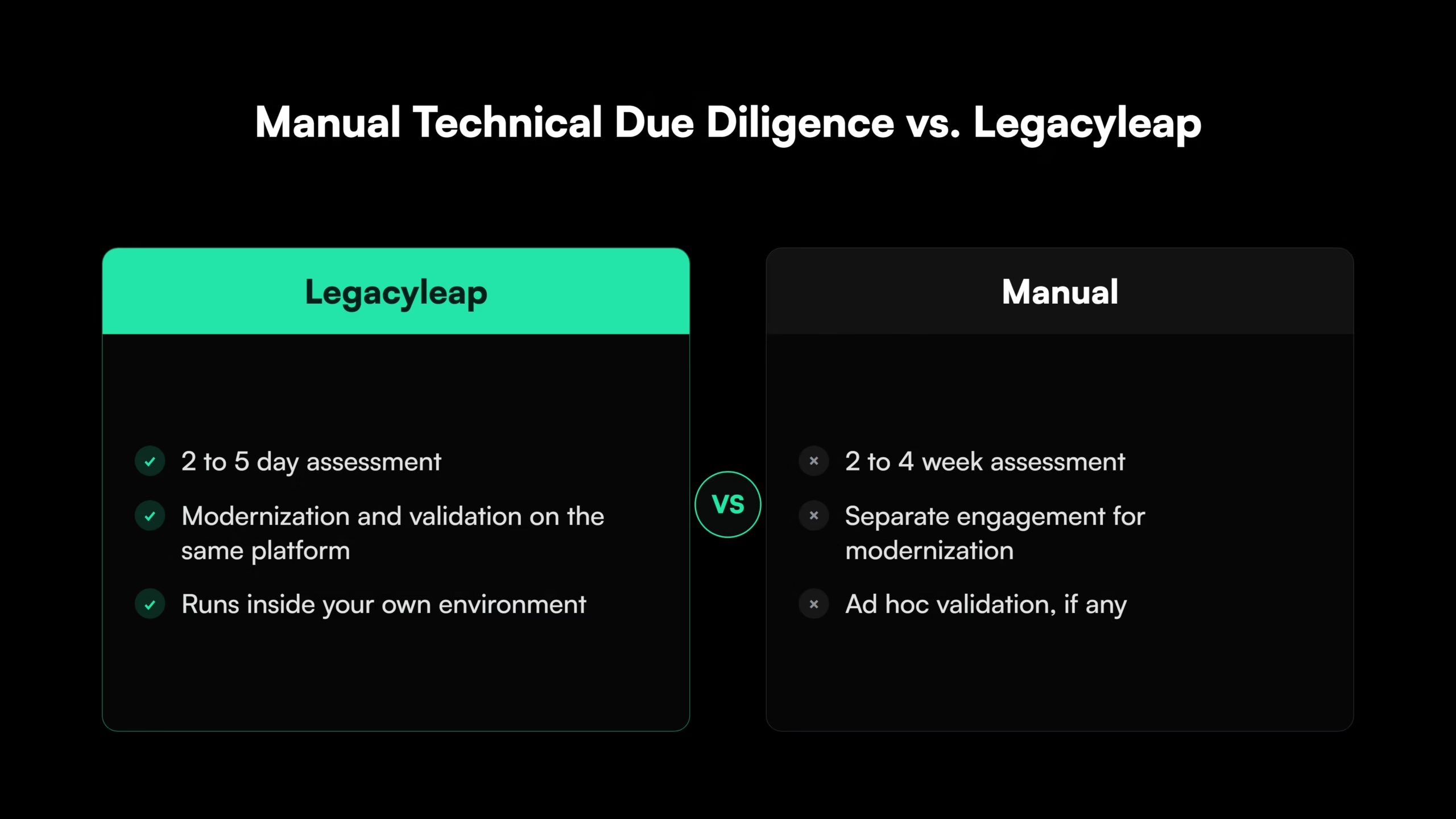
- A manual technical due diligence engagement takes two to four weeks. An automated, code-level assessment covering the same ground takes two to five days. The difference matters most early in the deal process, before terms are signed, when speed decides whether technical risk gets priced into the offer or discovered after.
- Diagnosis without execution leaves a portfolio company exactly where the checklist found it. Modernizing the data platform, not just documenting what is wrong with it, is what actually changes the technology’s condition before the next buyer’s diligence team looks.
- Exit multiples absorb the same technology risk diligence catches going in. GPs who start technical clean-up 12 to 24 months before exit report materially better valuation outcomes than those who start inside six months.
Data modernization in private equity comes down to three moments in a deal’s life: diligence, post-acquisition integration, and exit prep. At every one of them, a technical due diligence checklist and an executed fix are not the same deliverable.
The deals that lose money after close are rarely the ones where nobody ran diligence. They are the ones where diligence correctly flagged a legacy platform or a decade of accumulated technical debt, and nobody priced what closing that gap would cost, in dollars, in time, or in who would do the work.
This piece uses technical due diligence, IT due diligence, and technology due diligence interchangeably. All three describe the same review, and deal teams use all three terms depending on who is asking.
What Technical Due Diligence Checklists Cover in a Private Equity Deal
A private equity technical due diligence checklist has to answer three questions: what condition the target’s technology is actually in, what closing the gaps that matter will cost in dollars and time, and who can execute the fix without adding headcount or slipping the deal timeline.
Most published checklists answer only the first. That gap, between a diagnosis and a priced, executable fix, is where deals lose money after close and where multiples get discounted at exit.
Technical due diligence is the single biggest differentiator of deals done well or poorly, according to a McKinsey analysis of digital-focused M&A [1]. The failure pattern McKinsey documents is consistent: an acquirer confirms the technology exists and runs, and still gets surprised months later.
Confirming that something works is a different exercise than pricing what it costs to bring it to the standard the deal thesis actually requires.
| What a checklist covers | Generic technical due diligence | A full assessment |
| Architecture and dependency mapping | Interview-based, sampled | Full-codebase, automated |
| Cost to remediate | A rough range | An itemized modernization plan with effort and timeline |
| Who executes the fix | Not addressed, a separate engagement | Continues on the same platform that ran the assessment |
| Timeline | Weeks | Days |
The right column above is not hypothetical. It describes what an assessment has to produce to actually close the gap a checklist opens, and it is where the rest of this piece goes next.
The Cost of Closing Technical Due Diligence Gaps in a Private Equity Deal
Technical debt significant enough to affect integration shows up in 31% of acquired codebases, common enough that a deal team should plan for it rather than treat it as a surprise finding. When it is present, integration cost can run two to five times the number originally modeled.
Specific findings, such as unlicensed dependencies, security debt that transfers as buyer liability, or integration paths that turn out not to exist, can move deal pricing by a meaningful margin. In some advisory estimates, that’s as much as 5 to 15 percent of enterprise value, or in rare cases, enough to end a deal entirely.
Technical debt is not a deal-specific problem either. Across a broad sample of technology leaders, technical debt now absorbs 21 to 40 percent of total IT spending, meaning a significant share of every technology dollar a portfolio company spends goes toward servicing debt rather than building anything new [2].
The same pattern compounds further once AI enters the picture. Legacy technical debt is becoming an AI-readiness problem alongside a maintenance one industry-wide, which matters directly for any portfolio company whose value creation plan assumes it can run AI initiatives on top of its current data estate.
The gap between finding this and fixing it is mostly a matter of time. A manual technical due diligence engagement, covering architecture, team, security, and roadmap, typically takes two to four weeks. An automated, code-level assessment covering the same ground runs 2 to 5 days.
Start a $0 Modernization Assessment
A $0 Modernization Assessment produces the same dependency map, technical debt inventory, and cost-to-remediate estimate a manual engagement takes two to four weeks to deliver, in 2 to 5 days, from inside the target’s or portfolio company’s own environment, at no cost.
When Technology Due Diligence Should Start in a Private Equity Deal
Exploratory diligence typically runs two to four weeks before a letter of intent is signed, aimed at catching deal-breakers early. The deeper technical review usually gets pushed into the exclusivity period that follows, which commonly runs 30 to 90 days, on the assumption that a full technical engagement needs that runway.
That assumption holds only when the technical review itself takes weeks. When it takes days, the reason to defer it disappears. Running the assessment before the letter of intent, means technical risk gets priced into the offer instead of discovered after the seller has already granted exclusive negotiating rights.
Data Modernization in Private Equity: From Assessment to Execution
A migration plan is more than a line item on a checklist. It requires a target architecture decision, a refactor-replace-retain call for each major component, and an ordered sequence of phases.
That is exactly what Legacyleap’s Recommendation Agent produces directly from the assessment, not as a separate consulting deliverable billed afterward.
Execution is where this diverges furthest from a checklist exercise. The Modernization Agent decouples the data layer, migrates it to a modern store, and delivers the change as diff-based, human-reviewed pull requests, roughly 70% automated, with engineering review governing the rest. No code merges, deploys, or executes on its own.
A global credit-scoring firm’s Ab Initio to Apache Spark migration carried 1.5 million-plus lines of legacy ETL logic across credit risk and regulatory reporting. Migration to Apache Spark and Airflow ran more than 80% automated, cut time-to-market by 60%, and reduced total cost of ownership by 55%, with zero data loss.
This same execution discipline applies regardless of the trigger, a platform inherited through a deal that already closed, or one still being evaluated in diligence. A post-acquisition data platform integration runs this exact sequence once two systems need to work together.
The stakes compound further once an AI initiative depends on the result. AI pilots fail on the same kind of ungoverned legacy data foundation this section just walked through fixing.
Validating Data Platform Parity Before Cutover in a Private Equity Deal
A modernized data platform earns that description only once its behavior is proven to match what it replaced. The QA Agent closes that gap directly, auto-generating unit, integration, regression, and functional test cases, then running parity validation against the legacy baseline before cutover.
This matters more in a private equity context than it does elsewhere. A missed reporting deadline is a bad week. A broken cutover mid-hold-period, discovered once the fund and not just the company has capital committed, is a materially worse outcome, and the one a validated parity report exists specifically to prevent.
How Technical Debt Reduces the Multiple a Private Equity Buyer Will Pay
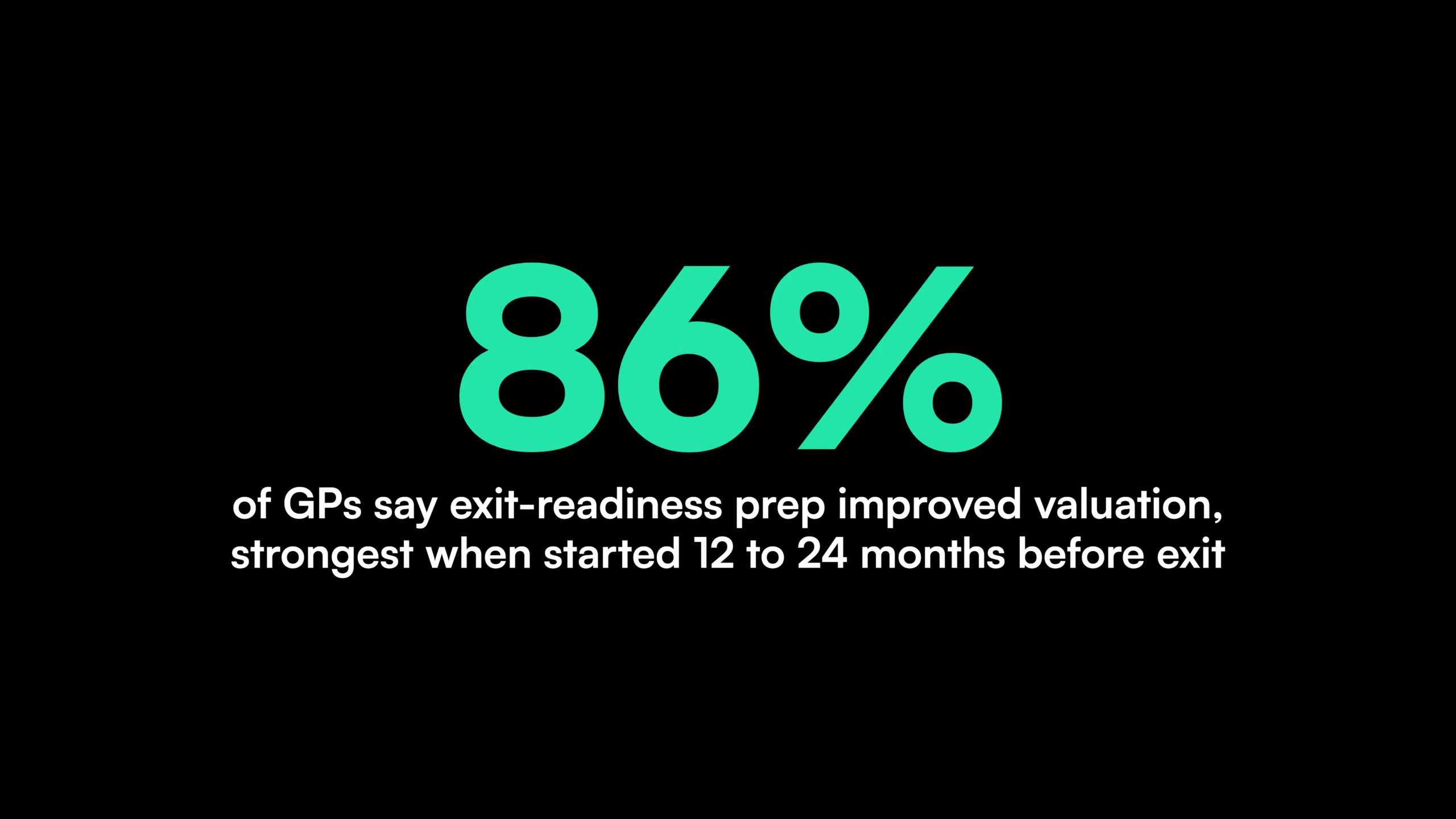
Legacy technology reduces the multiple a buyer will pay. EY’s 2026 Global Private Equity Exit Readiness Study puts a number on how much preparation is worth: 86% of GPs report that exit-readiness initiatives improved their eventual valuation [3].
Timing drives the size of that improvement. Among GPs who started preparation 12 to 24 months before exit, half reported a major improvement in outcomes. GPs who waited until inside six months of exit reported materially weaker results in the same study.
Data readiness specifically is where most GPs report the gap. 60% cite it as a current challenge, and 35% of the global private equity portfolio is now held for more than six years, longer than most technology decisions made at acquisition were built to last [3].
The fix is the same sequence this piece has already walked through, run under exit-side pressure instead of deal-side pressure: assess what condition the technology is actually in, execute the modernization the assessment recommends, and validate the result before a buyer’s own diligence team gets the chance to find what was not fixed.
Start a $0 Modernization Assessment
A $0 Modernization Assessment run 12 to 24 months before a planned exit produces the same architecture diagnosis and cost-to-remediate estimate a buyer’s technical due diligence team will eventually produce anyway, early enough to act on instead of discount for.
How Legacyleap Modernizes Data Platforms for Private Equity Technical Diligence
Legacyleap is a Gen AI-powered modernization platform that runs the full sequence this piece has described, assess, comprehend, modernize, validate, deploy, through five coordinated agents rather than a checklist handed off between separate vendors at each stage:
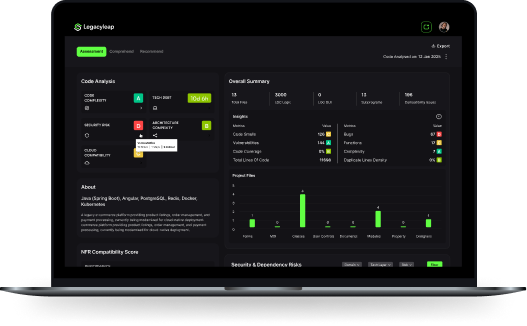
- The Assessment Agent produces the dependency map, technical debt report, and risk indicators in 2 to 5 days.
- The Documentation Agent reconstructs business logic directly from the codebase, which matters most when a target or portfolio company’s system was never formally documented, a common condition regardless of which side of a deal it sits on.
- The Recommendation Agent and Modernization Agent then carry the plan into execution.
- The QA Agent validates the result, the same lifecycle behind the credit-scoring migration described above.
The $0 Modernization Assessment is the entry point at any of the three moments this piece covers. It runs entirely inside the target’s or portfolio company’s own environment, with no source code leaving that environment.
That distinction matters specifically in a due diligence context, where source access is already one of the more sensitive asks a deal team makes.
| Manual, checklist-driven approach | With Legacyleap | |
| Assessment and documentation | Two to four weeks, limited by what a sampled review can cover | 2 to 5 days, produced directly from the full codebase |
| Modernization effort | Fully manual engineering time, billed separately from the assessment | Roughly 70% automated via diff-based, human-reviewed pull requests |
| Parity validation | Ad hoc, often reduced under deal-timeline pressure | Unit, integration, regression, and functional test cases generated and run before cutover |
| Where the work happens | Varies by vendor or contractor | Entirely inside the target’s or portfolio company’s own infrastructure |
Conclusion: Data Modernization in Private Equity Requires Execution, Not Just Diagnosis
A technical due diligence checklist that stops at diagnosis leaves a private equity buyer, or a portfolio company staring down its own exit, exactly where every existing checklist already leaves them: aware of the problem, without a priced, executable answer to what fixing it costs, how long it takes, or who does the work.
Assessment, execution, and validated parity are one continuous engagement, not three separate ones. Running it before a buyer’s diligence team finds the gap is what actually changes what a deal, or an exit, is worth.
Ready for a Plan Sized to Your System?
A $0 Modernization Assessment is the starting point for that engagement, at any of the three moments this piece has covered, delivered in 2 to 5 days from inside your own environment, at no cost.
Book a Technical Demo
See how Legacyleap’s agents handle whole-estate comprehension and parity validation on a codebase like yours.
Frequently Asked Questions
Nothing structural. The split tracks who’s asking: legal and finance teams tend to say IT due diligence, engineering-led buyers say technical due diligence, and advisory firms default to technology due diligence, but all three price the same set of risks in the same codebase.
Yes. EY’s 2026 exit-readiness research found 86% of GPs say exit-preparation work, including technology clean-up, improved their eventual valuation.
Enough to budget for rather than assume away. Integration cost on a deal with real technical debt can run two to five times the number originally modeled, and in some advisory estimates, specific findings move deal pricing by as much as 5 to 15 percent of enterprise value.
Rarely anyone, on their own. Legacy-stack talent is scarce and most internal teams are already sized for the product roadmap, not a parallel modernization program, which is why execution is usually where an outside platform or partner enters.
12 to 24 months. GPs who started that early reported materially better valuation outcomes than those who waited until inside six months of exit.
References
[1] McKinsey. The Telltale Signs of Successful Digital M&A
[2] Deloitte. 2026 Global Technology Leadership Study