
TL;DR
- Most enterprise legacy risk comes down to institutional knowledge walking out the door. Gartner projects 60% of modernization efforts will be delayed by a lack of legacy skills, and 70% will stall simply because no one left understands the system.
- Three specific failure modes explain why most AI-powered modernization projects stall. Using general coding assistants on undocumented code, sending source code to external AI APIs, and skipping structured differential testing are cited as the most common causes.
- Legacyleap runs five specialized agents across a five-stage modernization lifecycle. Documentation, Assessment, Recommendation, Modernization, and QA agents handle comprehension through deployment, backed by compiler-grade validation instead of pure probabilistic inference.
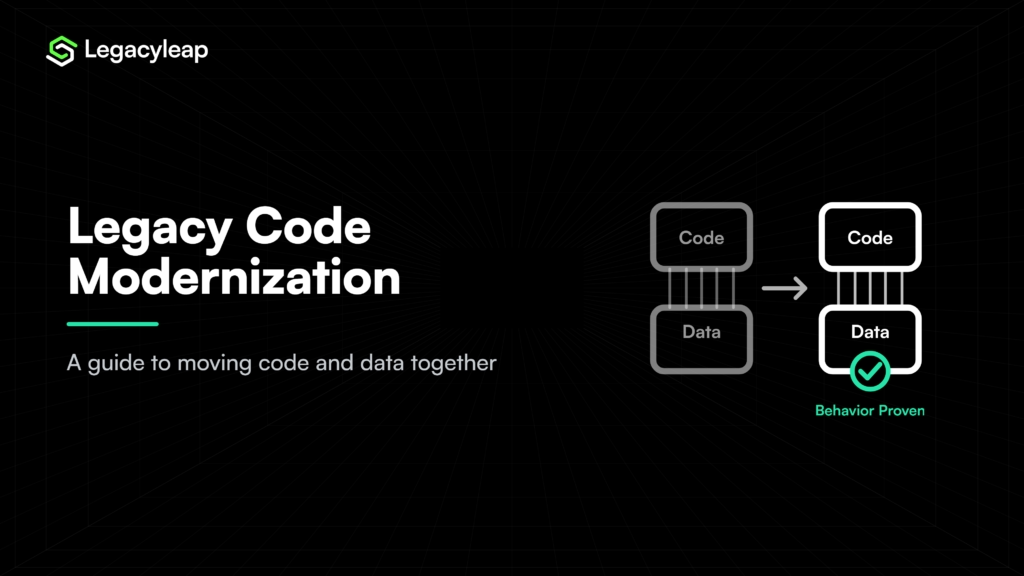
- A 20-year-old VB6 system for a fuel distribution company was modernized in 3 months instead of 12. Gen AI inferred undocumented business logic, generated layered documentation, translated the code to .NET, and built safety nets via automated test generation.
- Roughly 70% of code conversion is automated, but human judgment still gates production. Legacyleap reports modernization running 40-70% faster than traditional approaches, with assessment and documentation completed in 2-5 days and its QA Agent generating tests about 2x faster than manual methods.
Is Your Legacy System Blocking AI Adoption?
Before getting into the five-stage breakdown, a quick self-check. If two or more of these describe your situation, keep reading. This blog was written for you.
- Are your legacy applications preventing integration with modern AI platforms or APIs?
- Is your team spending more than 60% of your IT budget on maintaining existing systems?
- Do fewer than three people in your organization fully understand how your core legacy system works?
- Are the developers who built your legacy systems approaching retirement?
If so, your system is in the same position as most enterprise applications right now, and the risk of waiting compounds every quarter. Here is how a Gen AI-driven approach across all five stages changes the equation.
Let’s begin by examining the classic steps involved in modernizing applications, and why they need a change.
Why Traditional Legacy Modernization Fails Without Gen AI
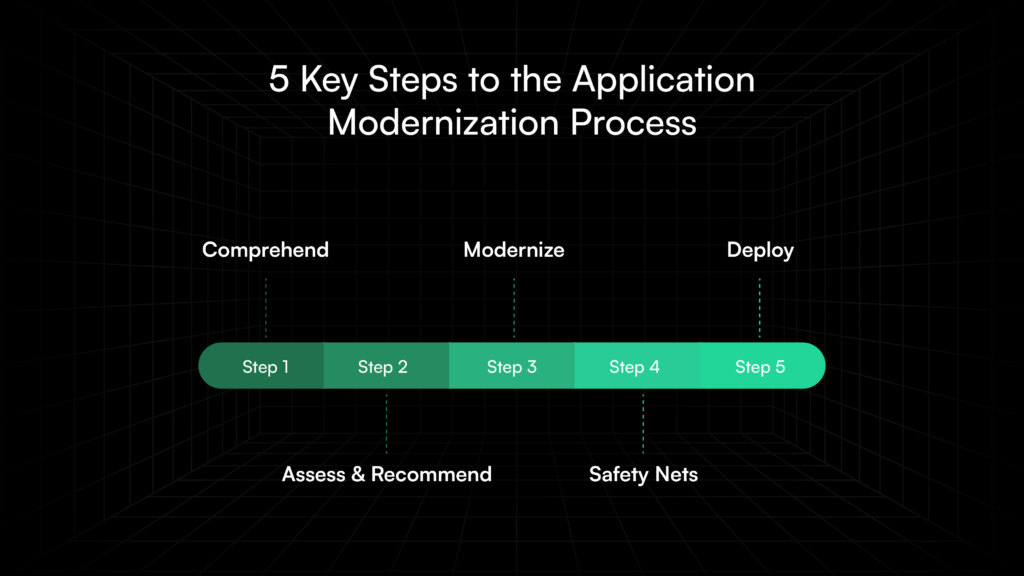
We’ve worked on numerous modernization projects over the years and realized that almost all of them involve 5 key steps that we’ll talk about.
- Step 1: Comprehend. Understand architecture, gather stakeholder input
- Step 2: Assess & Recommend. Evaluate legacy assets, code quality, and costs
- Step 3: Modernize. Choose strategy, implement transformation
- Step 4: Safety Nets. Mitigate risk through backups, testing, and planning
- Step 5: Deploy. Roll out updated systems with monitoring and optimization
Overview of the Traditional Application Modernization Lifecycle
Step 1: Comprehending Legacy Applications Without Gen AI
Most legacy applications were built without documentation. The developers who understand them are retiring. When that knowledge walks out the door, so does the ability to maintain or migrate the system safely.
This step is about understanding the current state of applications and their alignment with business objectives. It includes:
- Architecture audit: Reviewing existing systems to pinpoint weaknesses and areas for improvement.
- Stakeholder engagement: Collecting feedback from users and departments to ensure modernization meets business needs.
Step 2: Assessing Legacy Code and Modernization Readiness
Organizations evaluate their systems to identify what needs modernization, focusing on:
- Inventory of applications: Documenting legacy systems, dependencies, and performance issues.
- Technical debt analysis: Reviewing the codebase for complexity and security concerns.
- Cost-benefit analysis: Weighing the cost of legacy systems against the potential gains from modernization.
Step 3: Executing Legacy Application Modernization
Once assessments are done, organizations move forward with:
- Choosing a modernization strategy: Selecting approaches like rehosting, refactoring, or rebuilding.
- Implementation planning: Creating a roadmap that outlines key milestones and resource requirements.
Step 4: Managing Risk and Building Safety Nets
To minimize risks, safety nets are built around the modernization process:
- Risk management planning: Identifying potential risks and establishing contingency plans.
- Backup solutions: Implementing reliable backup systems to protect data during the transition.
Step 5: Deploying Modernized Applications to Production
The final step is deploying the modernized applications:
- Incremental rollout: Gradually implementing changes to reduce disruptions.
- Monitoring and optimization: Continuously assessing the performance of modernized systems to ensure they meet goals.
While these steps provide a structured approach, they can be slow and prone to issues, which we’ll explore in the next section.
The Real Cost of Modernizing Without Gen AI: 5 Bottlenecks That Stall Enterprise Projects
While the traditional app modernization process provides a roadmap, each step is fraught with challenges that often lead to delays, increased costs, and failures.
1. Comprehend
- Lack of understanding: Legacy systems are often more complex than they appear, and organizations struggle to grasp the full scope, especially when looking at the overall business and application context. This leads to incomplete assessments of their limitations.
- Insufficient stakeholder engagement: Without involving the right stakeholders early on, organizations risk misalignment between modernization goals and business needs, causing delays or project failure. Most documentation is also tailored toward technical audiences, which doesn’t help non-technical stakeholders make informed decisions.
- Inadequate documentation: Many legacy systems were built without detailed documentation, making it hard to understand dependencies and architecture. According to Gartner, 60% of modernization efforts will be delayed due to a lack of legacy skills, and 70% will stall not because of outdated technology, but because no one is left who understands it. The developers who built these systems are retiring, and the institutional knowledge they carry is not being captured.
2. Assess & Recommend
- Overwhelming complexity: Legacy systems often involve a tangled web of applications and dependencies, making it difficult to conduct thorough assessments. Key risks or opportunities can be overlooked, delaying the process.
- Resistance to change: Employees’ fear of job loss or workflow changes can lead to inaccurate feedback or incomplete evaluations, slowing down the assessment phase.
- Budget constraints: Limited budgets often force organizations to conduct surface-level assessments, leaving crucial issues unresolved and impeding a clear modernization strategy.
- AI readiness gap: Most legacy architectures were not designed to support modern AI workloads. Monolithic systems with tightly coupled components, batch-only data pipelines, and no API layer cannot be connected to AI agents or modern analytics platforms without first being decoupled. This makes legacy modernization a prerequisite for AI adoption, not just a maintenance task.
3. Modernize
- Technical debt: High technical debt slows down the modernization process. Refactoring code becomes costly and time-consuming, leading to extended project timelines and budget overruns.
- Skill gaps: The shortage of skilled personnel proficient in both legacy and modern technologies often leads to delays, as organizations scramble to find the right talent.
- Inadequate strategy: Without a comprehensive and aligned modernization strategy, organizations may struggle to execute business priorities, resulting in unfocused and inefficient efforts.
4. Safety Nets
- Underestimating risks: Organizations frequently fail to identify the risks associated with modernization, such as data loss, downtime, or system failures, which lead to significant setbacks during implementation.
- Lack of contingency planning: Without robust backup solutions and recovery plans, any unexpected issues during modernization can spiral out of control, causing delays and data integrity concerns.
- Cultural resistance: Employees often resist new processes or technologies, creating friction and undermining efforts to implement effective safety nets.
5. Deploy
- Incremental rollout challenges: An incremental rollout can be hard to manage without sufficient user training or clear guidelines, leading to disruptions and inefficiencies.
- Monitoring issues: Without proper post-deployment monitoring systems in place, organizations risk missing performance issues that could hinder the effectiveness of the modernized application.
- Poor communication: Inadequate communication about system changes can lead to confusion among users, resulting in poor adoption and inefficiencies that diminish the benefits of modernization.
These challenges highlight the limitations of the traditional modernization process, where inefficiencies, delays, and missed opportunities are all too common. Organizations are often left grappling with complexities, skill shortages, and resistance to change, making it difficult to achieve a seamless and timely modernization.


Why Most AI-Powered Modernization Projects Still Fail
Awareness of Gen AI’s potential in modernization has grown quickly. So has the rate of failed projects that tried to use it the wrong way. Three failure modes account for the majority of AI-powered modernization efforts that stall or produce unusable output.
Failure Mode 1: Using general-purpose AI tools on undocumented codebases.
Tools like coding assistants built for greenfield development generate code based on patterns, but they cannot verify whether the business logic of a legacy system has been preserved. The output looks plausible until it hits a production edge case that the tool had no way of knowing existed.
Legacyleap addresses this by running compiler-grade analysis on the legacy codebase before any transformation begins, so every output is grounded in a verified understanding of what the system actually does.
Failure Mode 2: Source code sent to third-party AI APIs.
For enterprises in regulated industries, the act of submitting source code to external AI services creates security and compliance exposure that many legal and compliance teams will not accept.
Legacyleap runs entirely inside the client’s own infrastructure. No source code, no business logic, and no sensitive data leaves the enterprise environment at any point in the process.
Failure Mode 3: No structured testing layer to confirm behavioral parity.
Without a differential testing framework that runs modernized output against legacy behavior in parallel, the only validation is human code review, which reintroduces the same manual bottleneck the AI was supposed to remove.
Legacyleap’s QA Agent auto-generates test cases and runs differential checks between the legacy and modernized systems, flagging any behavioral divergence before it reaches production.
These are not edge cases. They are the three most common reasons AI-assisted modernization projects fail, even when the underlying technology is sound.
How Legacyleap integrates Gen AI at every step without disruption
Most AI coding tools were built for new development. They fail on legacy codebases because they skip the hardest step: understanding what the code actually does before touching it.
Legacyleap was purpose-built for that comprehension layer and everything from there. It combines Gen AI with compiler-grade analysis so every transformation is grounded in verified business logic, not probabilistic inference.
When GitHub Copilot launched in 2021, it showed what was possible with AI-assisted development, but quickly revealed its limits when applied to large, undocumented legacy codebases.

That gap was the whole idea behind building Legacyleap: a Gen AI platform purpose-built for the comprehension and transformation challenges that general-purpose tools cannot handle.
Legacyleap’s suite of specialized agents supports every phase of the modernization lifecycle, including assessing and documenting legacy applications, generating architecture recommendations, executing governed code transformations, and auto-generating test cases to validate parity.

Real-World Example: Modernizing a 20-Year-Old VB6 System with Gen AI
A leading fuel distribution software company relied on a 20-year-old VB6 application with no documentation and a brittle codebase. Using Legacyleap, the team applied Gen AI to infer business logic, auto-generate layered documentation, translate the code to .NET, and build safety nets through test case generation. What would have taken 12 months manually was executed in just 3, proving that Gen AI, when grounded in structure and validation, can modernize even the most fragile systems.
Step 1: How Gen AI Reads and Maps Undocumented Legacy Code
The first step in the modernization journey is comprehension. This is where Legacyleap’s Documentation Agent goes beyond traditional code analysis to produce a deep, structured understanding of your legacy application, both for engineering teams and for non-technical stakeholders who need to understand what is being modernized and why.
The Documentation Agent builds a clear picture of the current system by generating three core categories of output. Where the legacy system is first described, you can go deeper into the comprehension approach here.
Here, we generate three key types of documents:
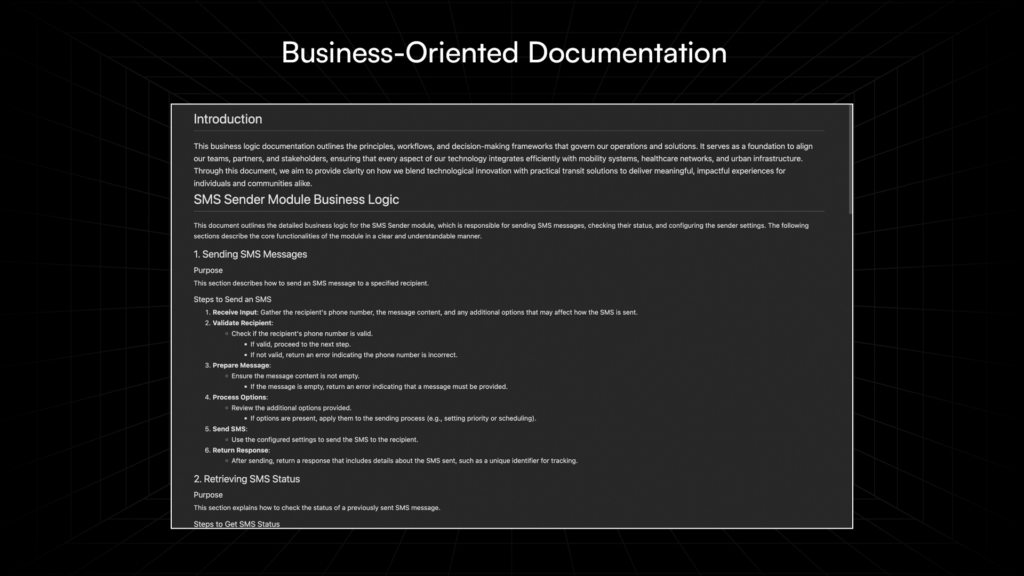
- Business-Oriented Documentation: Written in plain, functional language with no technical jargon, so non-technical stakeholders can understand the purpose and flow of the system. This covers business rules, workflows, and process logic extracted directly from the codebase.
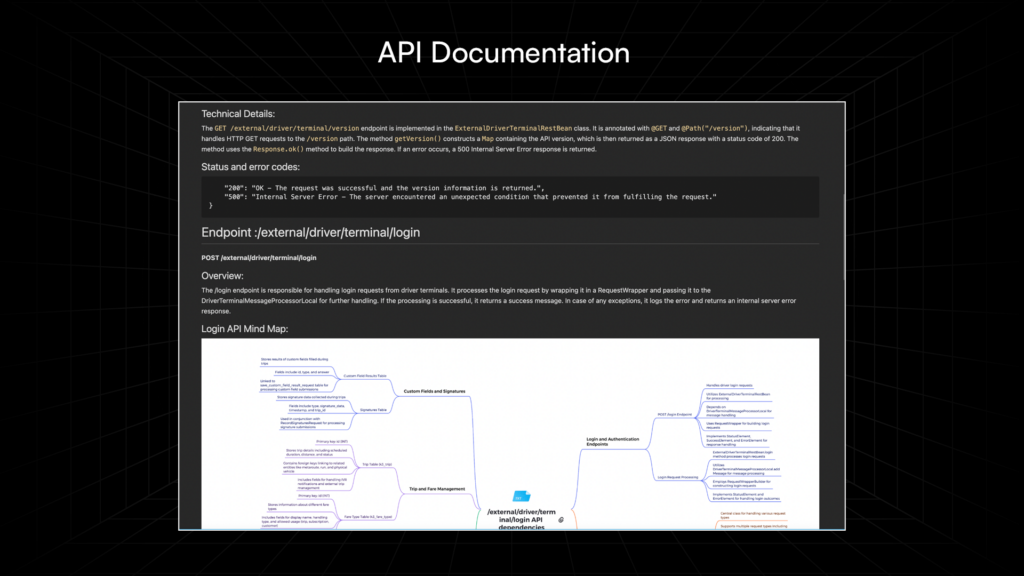
- API Documentation: A full inventory of the system’s APIs, covering input and output parameters, error codes, methods, and Swagger documentation. This gives engineering teams an organized view of how the system’s endpoints function and what they expose.
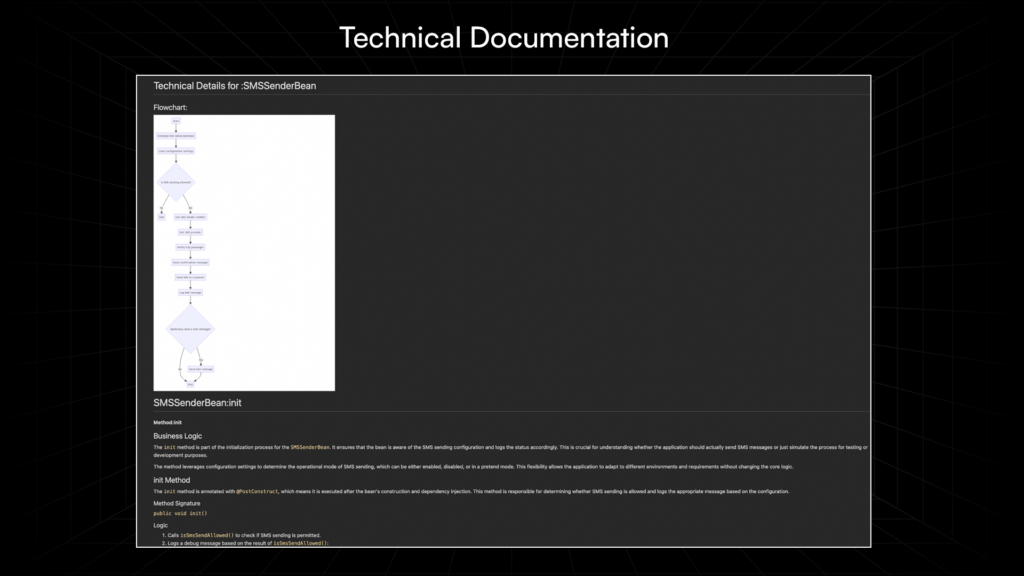
- Technical Documentation: Low-level insights including method definitions, inputs, exceptions, and a mind map of the codebase to serve as a visual representation that lets developers quickly grasp the architecture without combing through every file.
This first step produces the documentation baseline that every downstream modernization decision depends on. For legacy systems where original developers have left, it is also the step that recovers institutional knowledge that would otherwise be lost permanently.
Step 2: Gen AI for Code Assessment and Modernization Recommendations
The next step is assessment, where the Assessment Agent and Recommendation Agent work together to evaluate the current state of the application, surface risks, and generate a structured modernization plan.
The Assessment Agent focuses on two key areas:
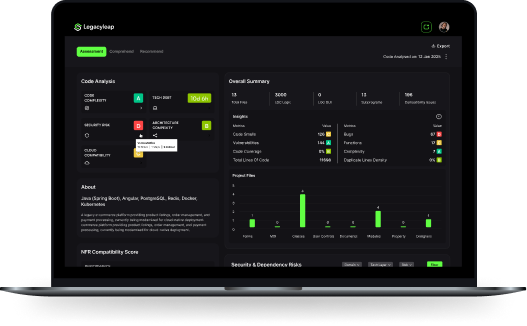
- Quality and health of the code: Anti-patterns, code smells, cognitive complexity, bugs, and security vulnerabilities. The output is a clear picture of where the codebase stands and what poses the most risk.
- Recommendations for improvement: The Recommendation Agent generates actionable paths forward. Target architecture suggestions, framework choices, priority ordering, and a step-by-step migration plan tailored to the stack.
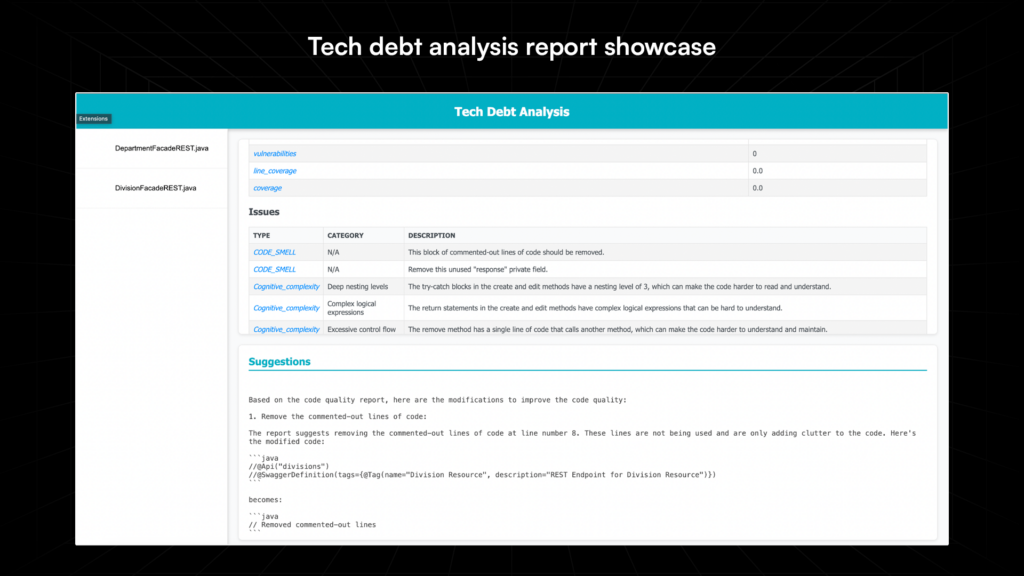
For instance, the Recommendation Agent may identify where monolithic code can be broken down into microservices and propose a sequenced plan for that decoupling.
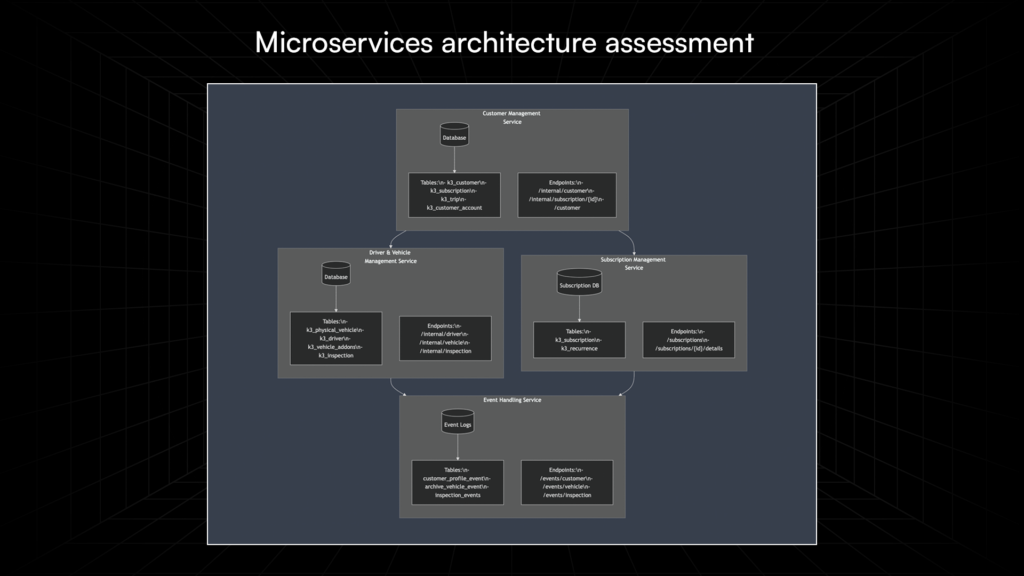
Together, these two agents give engineering teams a structured starting point: what to modernize, in what order, and with what expected effort, before a single line of code is changed.
Also Read: How Gen AI Identifies Risks and Opportunities in Legacy Code
Step 3: Gen AI-Assisted Code Conversion with Human Oversight
The most common concern at this stage is whether Gen AI can be trusted to convert business logic correctly.
Legacyleap addresses this through the Modernization Agent, which operates with human-in-the-loop controls at every decision point, confidence thresholds for automated conversions, and compiler-grade validation that flags any output that cannot be deterministically verified before it proceeds.
Every transformation produces a transparent diff and a review-ready change set, so nothing is committed without human sign-off.
This phase is highly flexible, adapting to the unique requirements of each project, whether it is a straightforward version upgrade or a comprehensive architectural overhaul.
Here is how the Modernization Agent approaches transformation:
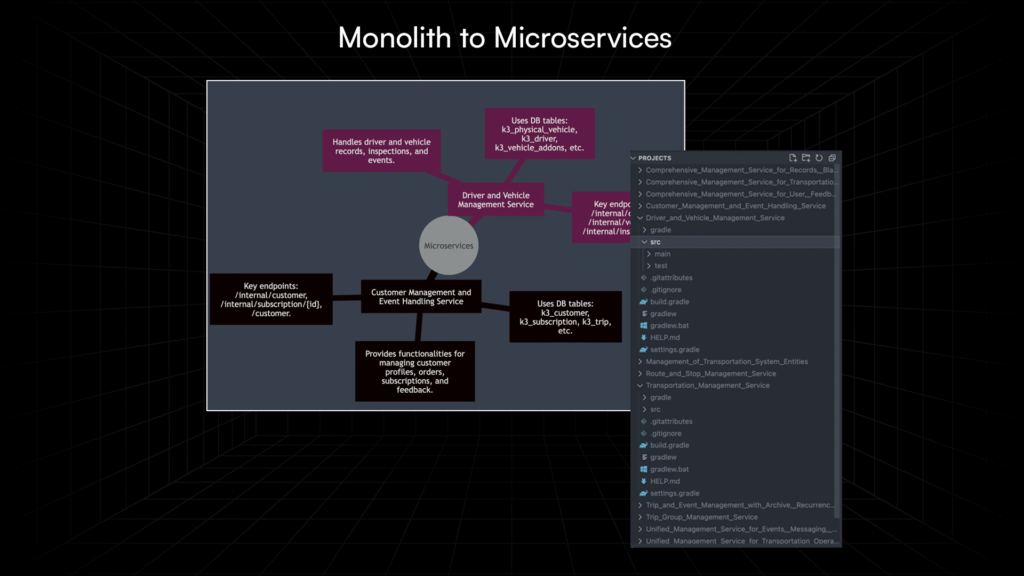
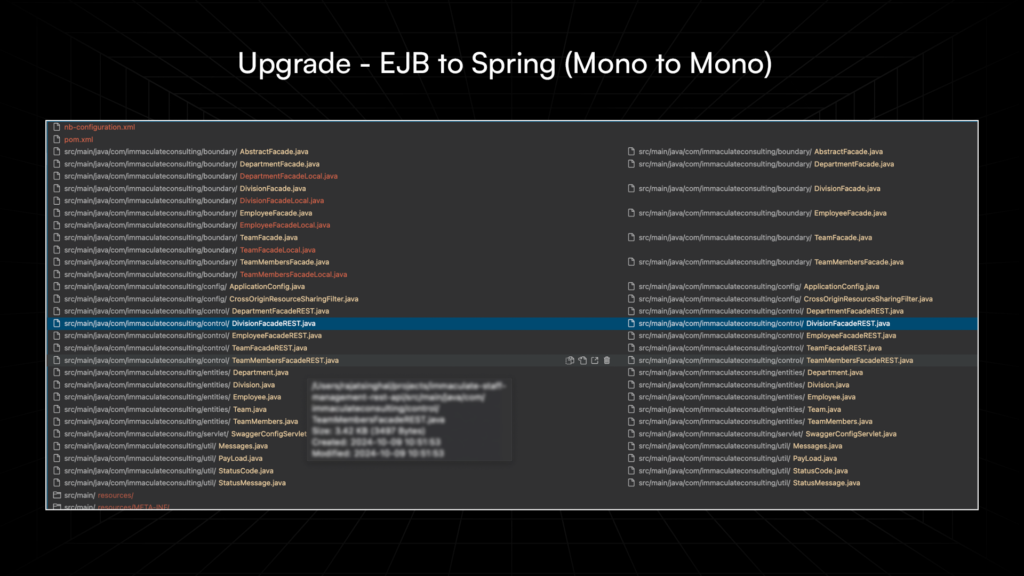
- Targeted architecture creation: Migration strategy is designed around the desired target architecture, tailored to the specific codebase. This could range from a direct upgrade (e.g., EJB2 to Java) to breaking monoliths into microservices.
- Layer-by-layer transformation: Whether dealing with EJB-to-Spring migrations or more complex refactoring, the Modernization Agent automates conversion across all application layers (REST endpoints, service layers, database entities) while maintaining logical integrity through the diff-based review process.
- Architectural revamps: For projects requiring extensive changes, the platform orchestrates architectural transformations such as redesigning legacy systems for microservices or integrating scalable frameworks, with each step governed and reviewable.
By combining Gen AI with compiler-grade analysis and structured human oversight, the Modernization Agent accelerates the timeline while preserving the accuracy and consistency that manual-only approaches cannot reliably maintain at scale.
Step 4: AI-Generated Tests That Validate Business Logic Accuracy
The question most teams ask at this stage is whether the modernized code behaves the same way as the original. Legacyleap’s QA Agent answers this by auto-generating test cases that run the new code against the legacy system in parallel and flag any behavioral difference before it reaches production.
Here is what this step produces:
- Automated test case generation: The QA Agent generates unit, integration, API, and regression test cases across every layer of the application. These are not boilerplate tests. They are generated from the actual business logic extracted during the comprehension phase.
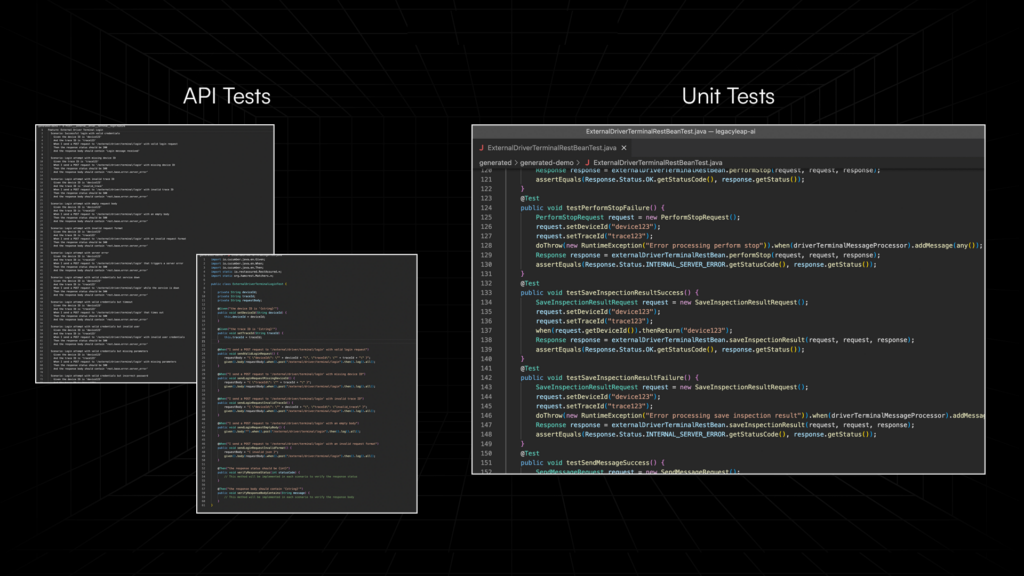
- Behavior-Driven Development (BDD) testing: Test cases are written in clear Gherkin syntax, making them accessible to non-technical stakeholders as well as engineering teams. BDD-style tests validate functionality while keeping alignment with the business requirements documented in Step 1.
- Differential parity checks: The QA Agent runs modernized output against legacy behavior directly, confirming functional parity and surfacing divergence before integration. This is the mechanism that makes “100% functionality parity” a verifiable outcome rather than a claim.
The QA Agent delivers approximately 2× faster test creation compared to manual approaches, and the differential checks replace the human review bottleneck that most modernization programs reintroduce at this stage.
Also Read: How Gen AI Builds Unbreakable Safety Nets for Modernization
Step 5: Automated Deployment with Gen AI
The deployment phase is where the modernized application moves to the target infrastructure. Legacyleap ensures this process is governed, traceable, and aligned with the organization’s deployment goals.
Here is how this step works:
- Automated artifact generation: Legacyleap generates deployment artifacts (Helm charts for Kubernetes, Terraform scripts for EC2, serverless configurations), customized based on the infrastructure recommendations from the Assessment and Recommendation Agents. This eliminates manual intervention and reduces time-to-production.
- Flexible deployment options: Whether Kubernetes, serverless, or traditional VM-based setups, Legacyleap adapts to existing infrastructure preferences and integrates with platforms like AWS Bedrock.
- Legacyleap Studio for governance and visibility: Deployment is managed through Legacyleap Studio, which provides different interfaces for different stakeholders:
- CLI for batch-oriented tasks like generating deployment reports
- Custom IDE for development teams, optimized for legacy modernization workflows
- Web UI for business leaders to monitor progress, access reports, and confirm alignment with strategic goals
- CLI for batch-oriented tasks like generating deployment reports
- Privacy and security by design: The platform operates entirely within the enterprise’s own infrastructure. No source code, no business logic, and no sensitive data exits the organization’s environment at any point, from initial assessment through final deployment.
Also Read: How to Use Gen AI to Achieve Efficient Modernization Deployment
Wrapping Up: Modernization is a puzzle. Gen AI is the missing piece.
Modernization has long been seen as a technical necessity. Gen AI has broadened its feasibility, but only when it is applied with the right structure. The failure modes outlined earlier in this blog are real: tools that generate code without understanding it, pipelines that expose source code to external services, and testing gaps that let behavioral divergence reach production.
What changes with the five-stage approach is that each phase produces verifiable outputs. Comprehension before transformation. Differential testing before deployment. Human oversight at every decision point where the stakes are high. Gen AI accelerates every phase, but the structure is what makes the acceleration safe.
If your organization is running systems built on VB6, ColdFusion, EJB, or similar stacks, and the developers who understand them are nearing retirement, the window to modernize safely is narrowing. Every quarter of delay adds to the technical debt your team will eventually have to pay down under worse conditions.
The starting point is understanding what you actually have.
FAQs
When applied with the right structure, Legacyleap accelerates modernization 40–70% faster than traditional vendors or in-house approaches, with ~70% of code conversion automated by Gen AI. Assessment and documentation of a complete legacy application takes 2–5 days. The remaining effort is focused on human-reviewed transformation, parity validation, and deployment, all the phases where engineering judgment still matters most.
ROI is typically measured through cycle-time reduction, engineering effort saved, defect leakage reduction, and improved release predictability. Most enterprises see the clearest value in faster code comprehension, reduced manual refactoring effort, and earlier risk detection. Legacyleap’s $0 assessment produces architecture maps, dependency graphs, effort ranges, and a migration timeline before any budget is committed, giving teams a concrete basis for ROI modeling before the program begins.
The primary risks are data exposure and unverified code generation. Legacyleap addresses both: all processing runs inside the client’s own infrastructure with no source code leaving the environment, and every transformation output goes through compiler-grade validation and human-reviewed diffs before it is accepted. Governance trails, human approvals, and full traceability are built into the platform through Legacyleap Studio’s governance layer.
Enterprise-grade modernization requires more than a general-purpose coding assistant. Unlike tools built for greenfield development, Legacyleap is purpose-built for legacy systems, combining five specialized agents (Assessment, Documentation, Recommendation, Modernization, QA) with compiler-grade analysis across the full modernization lifecycle. The platform supports VB6, EJB, ColdFusion, Classic ASP, AngularJS, early .NET, and more, with target stacks including .NET Core, Spring Boot, React, and cloud-native microservices.
The Modernization Agent analyzes legacy code structure, infers business logic through compiler-grade parsing, maps patterns to modern equivalents, and generates refactored code candidates with transparent diffs. Confidence thresholds determine what is automated and what is escalated for human review. The QA Agent then validates behavioral parity against the original system before any output is integrated. Human oversight remains essential. Gen AI accelerates the process, but architectural decisions and production readiness require experienced engineering judgment.
Human involvement is built into every critical decision point. Architectural choices, transformation approvals, parity validation, and production sign-off all require engineers. What Gen AI eliminates is the manual, repetitive work in between such as code reading, documentation generation, test case creation, and dependency mapping. Legacyleap’s platform is designed so that engineering time is spent on decisions, not on tasks that can be automated reliably.
Yes, and this is one of the primary use cases for Legacyleap. The Documentation Agent infers system behavior directly from source code, database schemas, and runtime dependencies to generate functional and technical documentation from scratch. This is the foundation for every subsequent modernization step. Human validation is still required to confirm inferred business logic, particularly for complex or ambiguous rules, but the agent dramatically reduces the time required to reach a documentation baseline from months to days.