Migrate Legacy .NET Framework to .NET Core LTS 50–70% Faster
Unleash Unmatched .Net Framework Modernization Velocity with Legacyleap
Legacyleap sets new benchmarks for application modernization initiatives using Gen AI

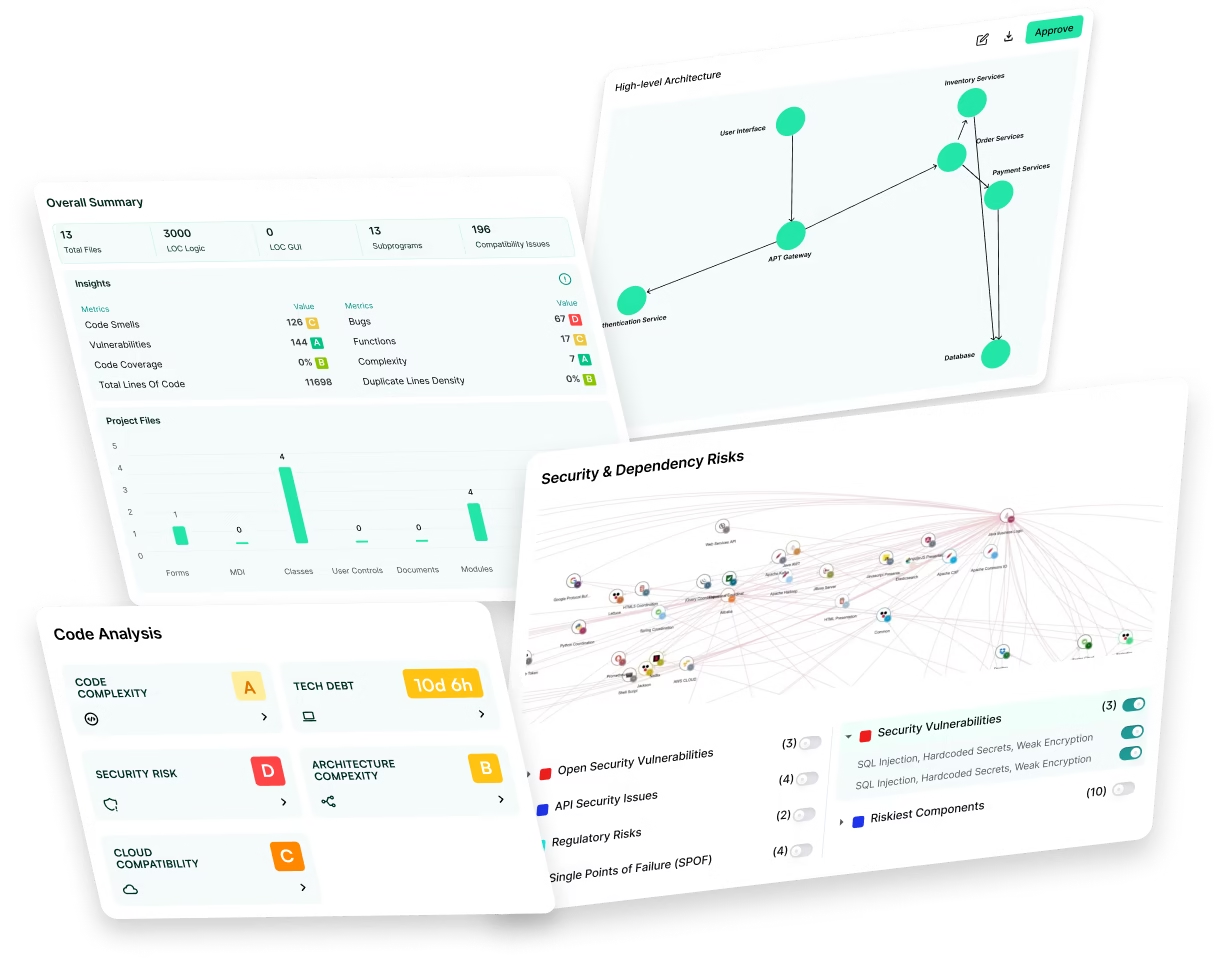
2-5 days to assess and document the entire legacy application

~70% modernization automated by Gen AI

2x Faster modernization timelines vs. vendors or in-house

100% functional parity, validated and compliant




PLATFORM
Coordinated Agents for Every Phase of .NET Framework Migration
Legacyleap manages .NET Framework modernization by breaking it into controlled phases. Each agent focuses on one responsibility, ensuring decisions around upgrades, refactoring, and validation are made with full visibility into dependencies and runtime behavior.
- Assessment Agent
- Documentation Agent
- Recommendation Agent
- Modernization Agent
- QA Agent
Assessment Agent
Understand How Your .NET Framework Application Executes
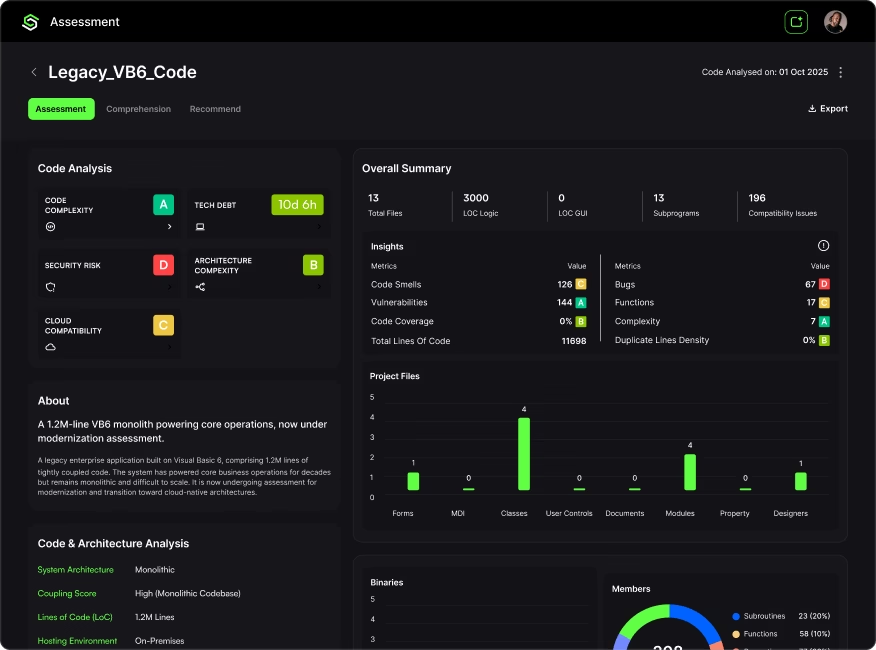
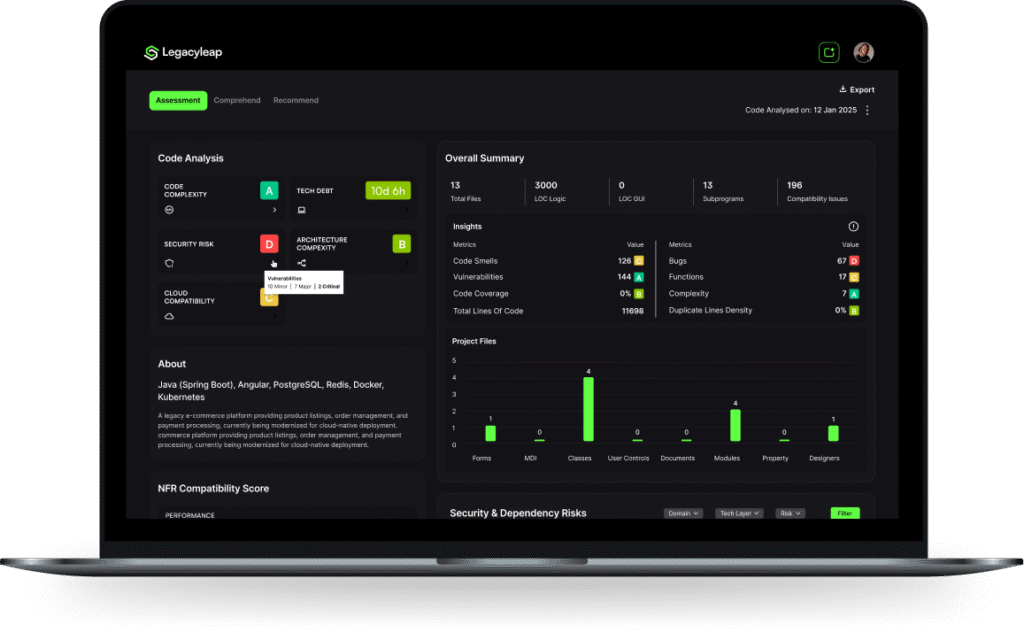
Upload your codebase to generate a full assessment that surfaces runtime dependencies, compatibility risks, and modernization constraints within 2–3 days.
Runtime dependency analysis
Framework compatibility risks
Windows and IIS coupling
Modernization readiness
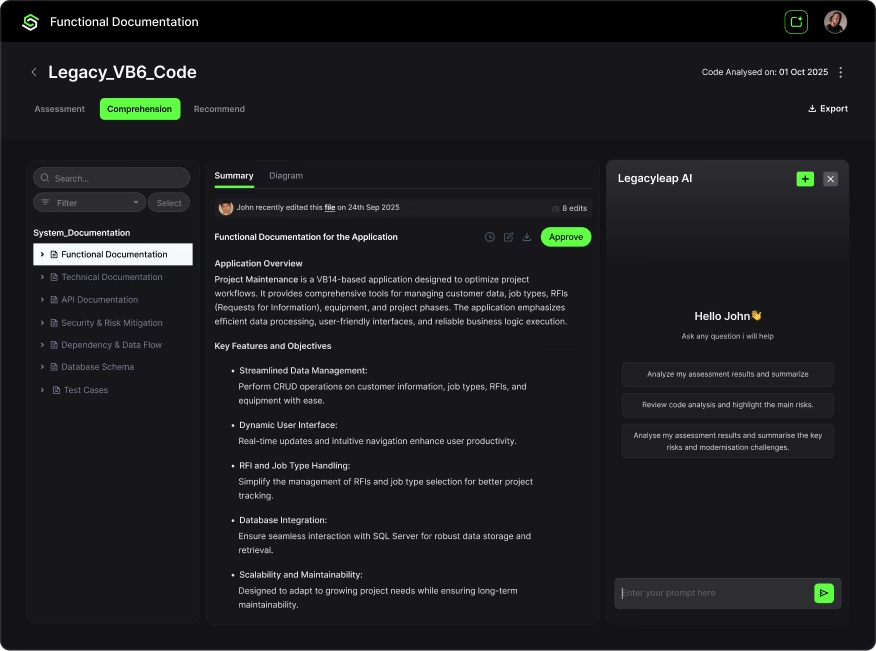
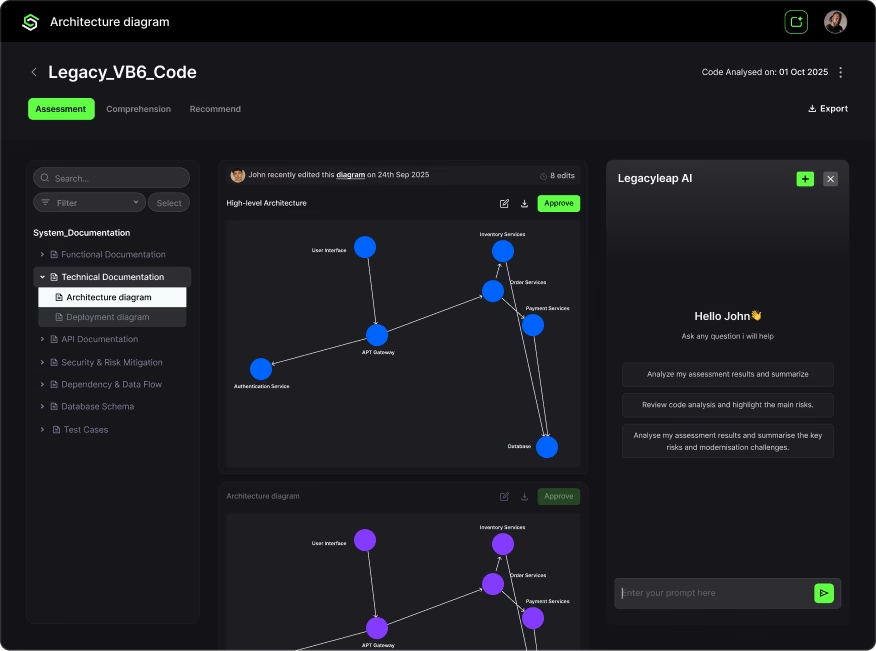
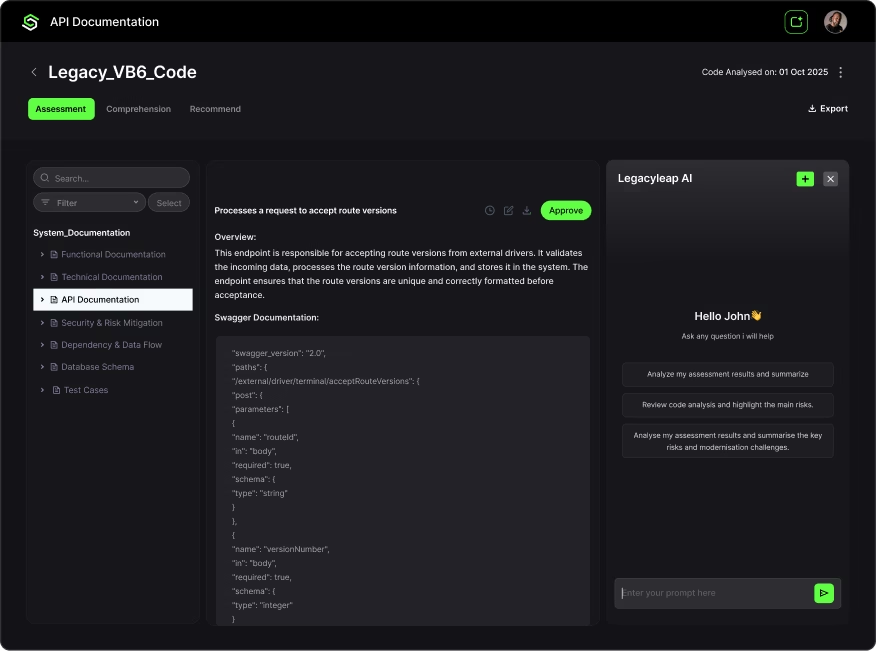
Documentation agent
Generate System Documentation from Live Code and Execution Paths
The Documentation Agent derives accurate documentation directly from your .NET Framework codebase and execution paths, without relying on outdated diagrams or institutional knowledge.
Application and service interaction maps
API, WCF, and background service flows
Configuration and hosting dependencies
Functional and technical documentation
Recommendation agent
Produce a Runtime-Aware .NET Modernization Plan
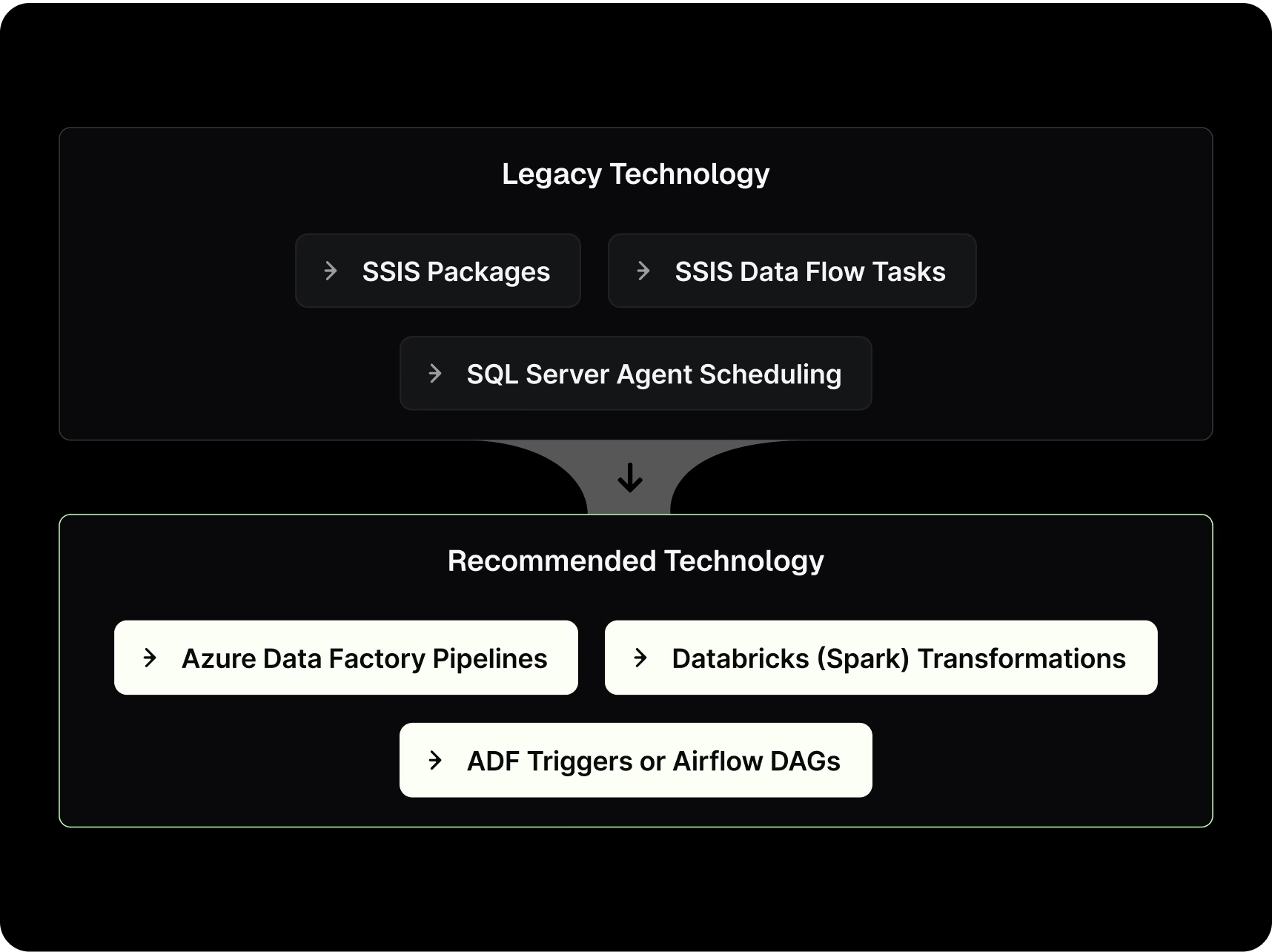
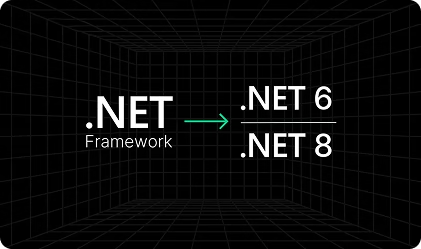
The Recommendation Agent generates a concrete modernization plan tied directly to your application. It determines what should be refactored, replaced, or retained to move safely from .NET Framework to modern, unified .NET runtimes (including current LTS versions such as .NET 6 and .NET 8).
Target runtime strategy
Refactor, replace, retain decisions
Ordered modernization phases
Module-level effort and risk
Modernization agent
Automate Up to 70% of .NET Framework Code Modernization
The Modernization Agent executes the approved plan incrementally while keeping systems stable. It refactors code, resolves compatibility gaps, and structures changes in controlled steps.
Refactored and modernized .NET code
Generated pull requests
Compatibility gap reports
Actionable remediation tasks
QA Agent
Verify Behavioral Parity Across Runtime Boundaries
The QA Agent validates the modernized application against the original .NET Framework system using tests generated from real execution behavior to ensure parity before release.
Unit and integration test cases
Regression test coverage
API and service validation
Parity verification reports
Try Legacyleap
Try Legacyleap on Your .NET Framework Codebase for $0
We’ll scan a portion of your application and deliver export-ready documentation, dependency maps, and modernization insights within 3-5 days. No obligation.
MODERNIZATION APPROACH
.NET Framework Modernization Paths Supported by Legacyleap
The platform evaluates your system, determines the modernization path, and executes it end-to-end.
Migrate from .NET Framework to Modern .NET
For systems built around long-lived business logic and Windows-centric runtimes.
Resolving runtime constraints
Reducing platform coupling
Preparing applications for long-term support
Incremental Modernization for Large .NET Portfolios
For enterprises managing multiple applications and shared services.
Phased execution
Parallel validation
Keeping delivery moving during transformation
Unified by the Legacyleap Platform
Both paths are powered by the same evaluation engine, automation workflows, and execution framework - ensuring consistency, visibility, and control across modernization efforts.
Is Legacyleap Right for Me?
Choose between full-service delivery or platform access, both built to get you to production faster and safer.
You bring the system. We bring the outcome.
.Net Framework Modernization Services
- Starts with a $0 Assessment
- Hands-off execution with full traceability
- Handles undocumented, fragile systems
- Parallel test generation + rollout planning
- Managed delivery with validation checkpoints
- Production-grade output, not POCs
Leverage your internal or SI teams with our platform.
Platform Licensing
- Full access to Studio (Web UI, IDE, CLI)
- Agent copilots tailored for legacy systems
- Reusable across multiple teams or programs
- Architecture maps and test harnesses
- Built-in human-in-the-loop controls
- Flexible enterprise pricing
Legacyleap in Action
Insider Notes: Migrating from .NET Framework to .NET 6+ with Gen AI Guardrails
A grounded look at how Gen AI makes .NET Framework to 6+ migration predictable, controlled, and verifiably safe at enterprise scale.
Technical Demo
See Legacyleap in Action
Legacy modernization doesn’t have to take years of discovery and millions in risk. In this live demo, we’ll show you how Legacyleap autogenerates the artifacts, plans, and code transformations needed to compress months of manual work into days.
What You’ll See:
Real-time architecture visualization
SBOM generation
AI-powered code comprehension
Drift detection, and more
Is .NET Framework still viable in 2026?
.NET Framework remains supported in limited scenarios, but it is no longer the strategic runtime for modern application development. Teams increasingly face constraints around platform evolution, deployment flexibility, and long-term maintainability across modern .NET runtimes such as .NET 6 and beyond.
How can I modernize a large .NET Framework system safely?
The safest approach is to begin with runtime and dependency analysis, followed by incremental modernization with continuous validation. Legacyleap is built around this model, using agentic GenAI to understand system behavior before execution.
Do I need to rewrite my entire .NET Framework application?
No. Most systems can be modernized incrementally. The focus is on correcting runtime assumptions, refactoring where required, and retaining stable logic while validating behavior throughout the process.
How long does .NET Framework modernization take with Gen AI?
Timelines vary based on complexity, but Gen AI significantly compresses execution. Programs that traditionally take 6-12 months can often be reduced by up to 50% through automated assessment, code refactoring, and behavioral validation.
Is Legacyleap suitable for enterprise .NET applications?
Legacyleap is designed for enterprise-scale .NET systems, including complex integrations and production-critical workloads, with controlled execution and verifiable outcomes.