Gen AI Migration Platform to Retire Legacy Delphi Applications
Legacyleap is an enterprise modernization platform that compresses .NET Framework application discovery, modernization planning, runtime transition, code refactoring, and validation through a unified agentic system while preserving 100% functional parity.
Unleash Unmatched Modernization Velocity with Legacyleap
Legacyleap sets new benchmarks for application modernization initiatives using Gen AI




2-5 days
to assess and document the entire legacy application
~70 %
modernization automated by Gen AI
2x
Faster modernization timelines vs. vendors or in-house
100%
functional parity, validated and compliant
PLATFORM
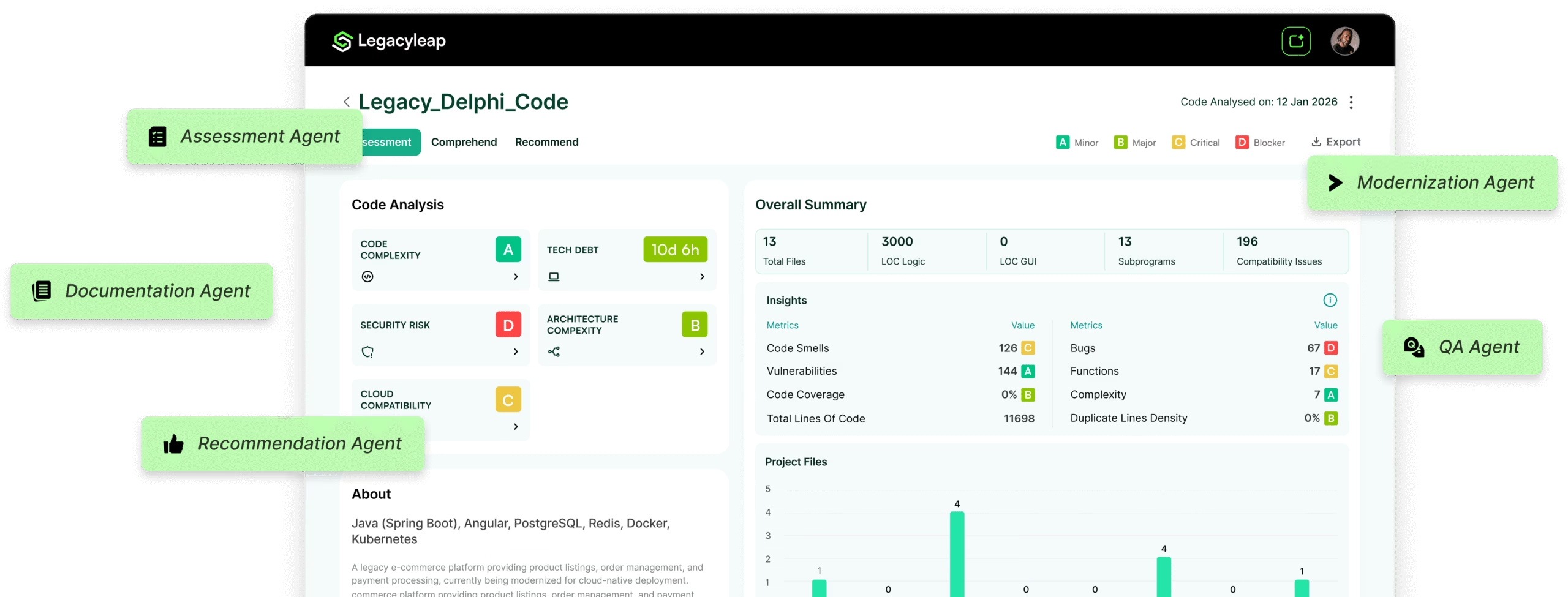
End-to-End Delphi Modernization with Legacyleap's Agents
Most Delphi systems were built incrementally over years, with business rules embedded across UI logic, data access layers, and side effects. To modernize these systems safely, each phase must be handled independently yet in coordination, which is why Legacyleap operates through specialized agents.
- Assessment Agent
- Documentation Agent
- Recommendation Agent
- Modernization Agent
- QA Agent
Assessment Agent
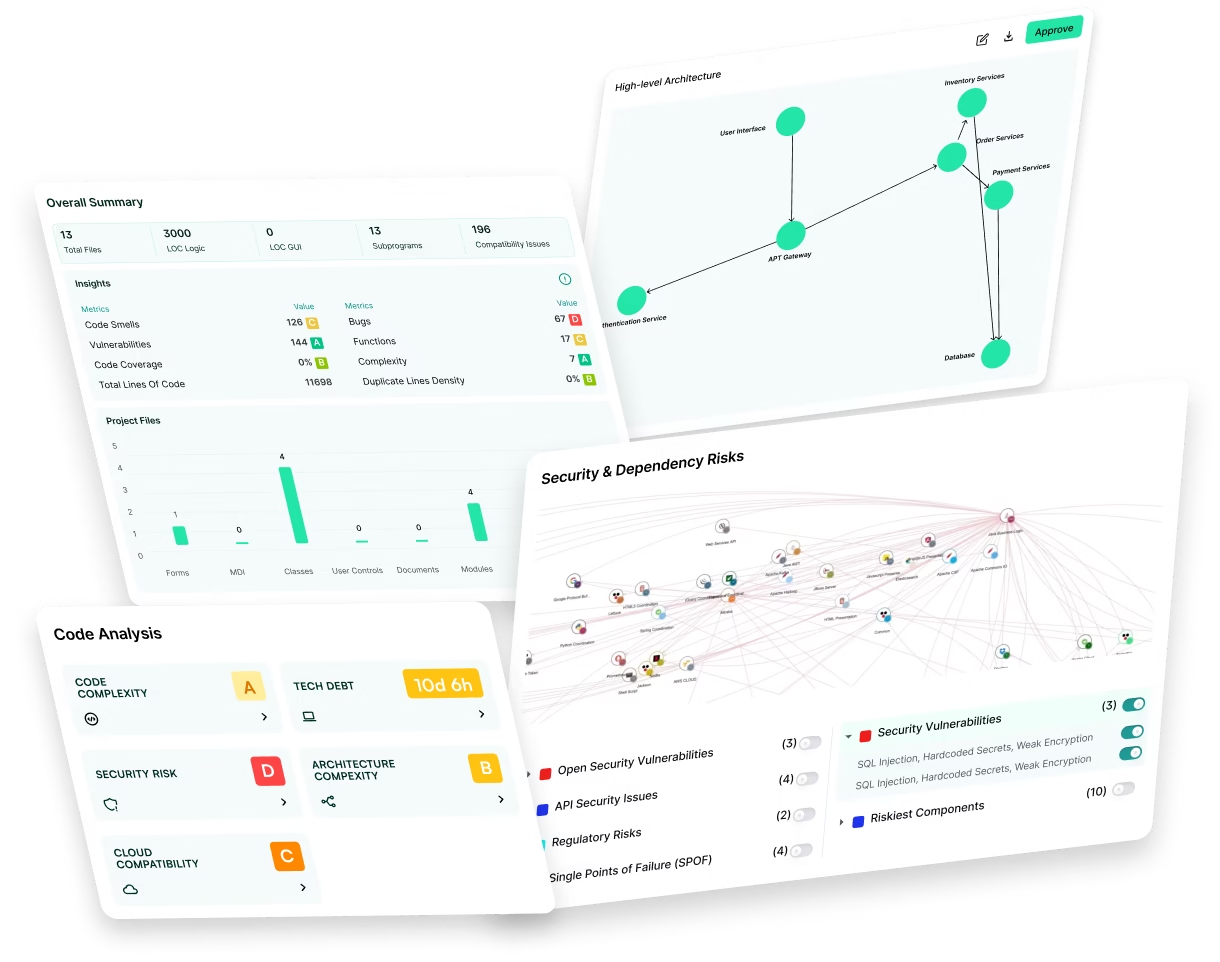
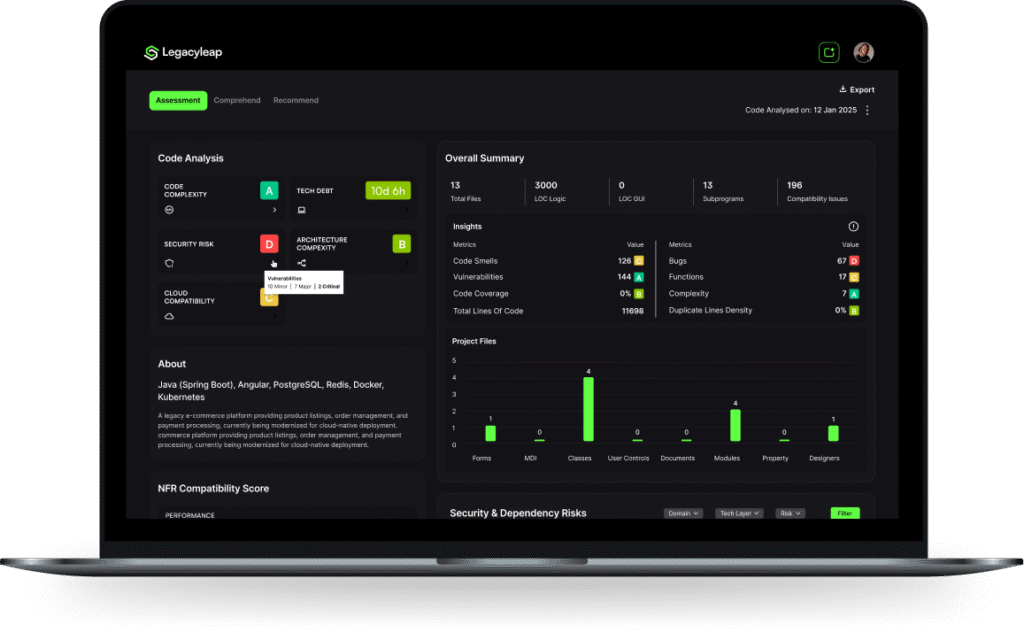
Understand legacy Delphi app risk, scope, and effort upfront
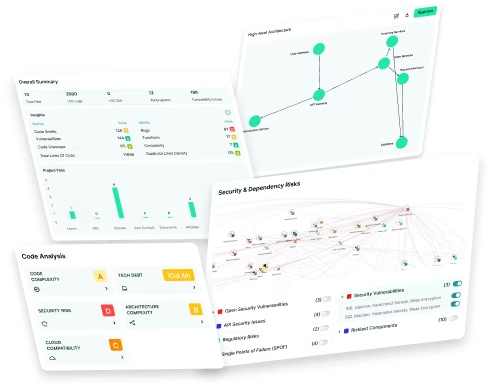
Evaluates system structure to generate automated recommendations for Delphi to C#, .NET, or React, along with a step-by-step migration plan grounded in real code constraints.
Documentation agent
Rebuild accurate system documentation from Delphi code
Extracts a complete system inventory directly from Delphi source and behavior, including SBOM, APIs, integrations, and functional documentation teams can rely on during migration.
Recommendation agent
Determine the right Delphi migration path
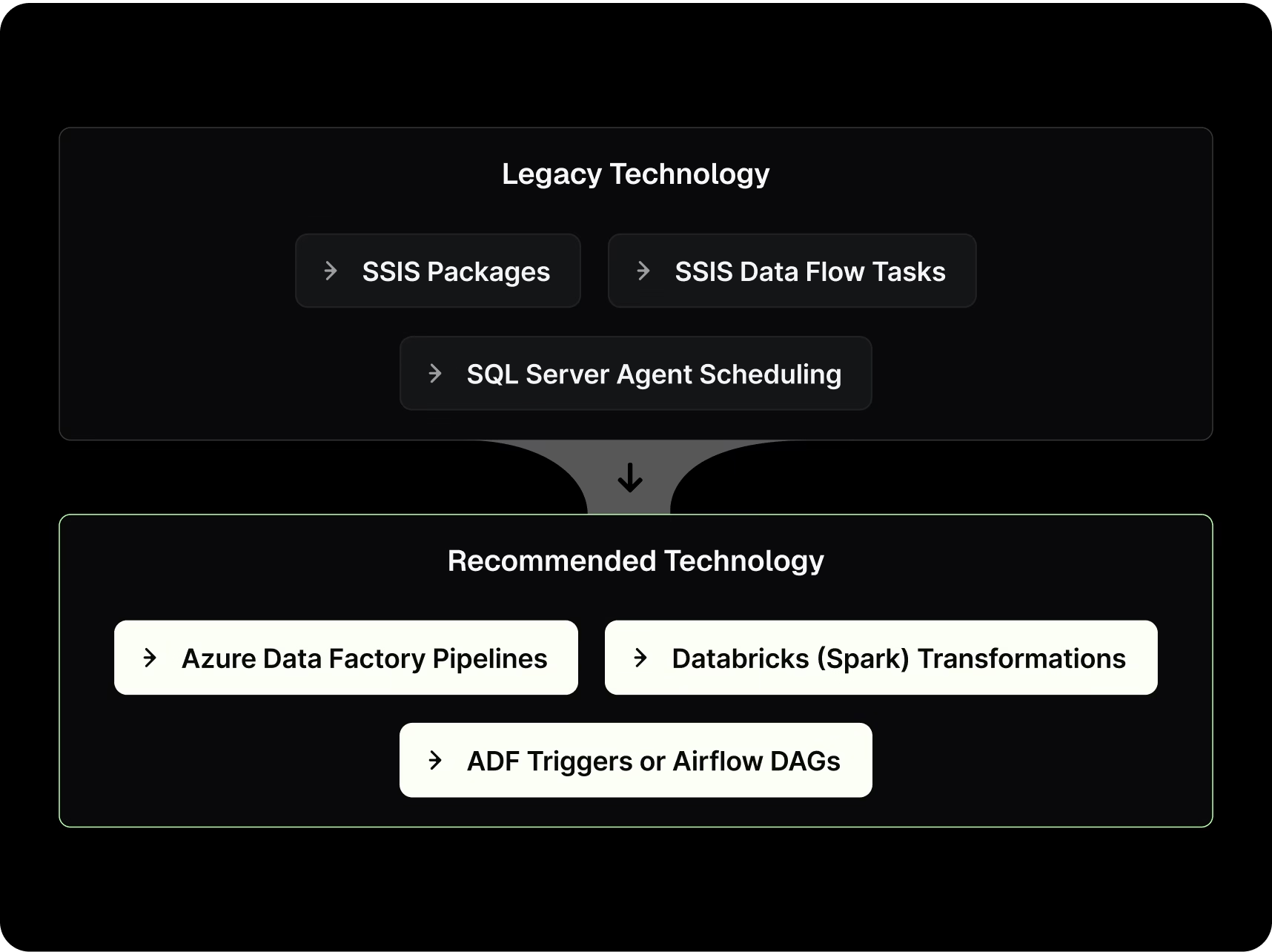
The Recommendation Agent generates a concrete AngularJS migration plan tied directly to your codebase. It determines what should be modernized, in what order, and which target framework to move to across Angular, React, or Vue.
Modernization agent
Convert Delphi code in controlled stages
Executes Delphi modernization incrementally by converting Object Pascal logic, generating refactored code, pull requests, gap reports, and actionable to-do lists without destabilizing production.
QA Agent
Validate Delphi migration with functional parity
Generates unit, regression, integration, and API test cases to confirm the modernized application behaves exactly like the original Delphi system before release.
$0 Assessment
Test Legacyleap on Your Legacy Delphi Codebase for $0
Run a real assessment on one Delphi application and see how Legacyleap works before committing to a migration.
We analyze your Delphi codebase and deliver export-ready artifacts that teams typically spend months assembling manually.
We’ve completed 150+ production-grade assessments to help teams determine whether Legacyleap is the right fit before committing.
Migration Paths
Delphi Migration Paths Supported by Legacyleap
Every Delphi system is different. The right target stack depends on how your application was built, how it is used today, and how it needs to evolve next. Legacyleap evaluates your Delphi codebase and executes the migration path end to end.



Migrate to C#
Best suited for long-running Delphi applications with dense business logic and strong alignment to the Microsoft ecosystem.
Preserve complex Object Pascal logic in a modern, strongly typed language
Enable long-term maintainability and enterprise-grade tooling
Ideal for core systems that prioritize stability over UI flexibility

Migrate to .NET
Designed for Delphi systems tightly coupled to Windows, services, and backend workflows.
Modernize runtime, libraries, and architecture without disrupting behavior
Align legacy systems with modern .NET frameworks and deployment models
Reduce operational risk while extending system lifespan

Migrate to React
For Delphi applications where UI constraints limit usability or future growth.
Decouple frontend from legacy logic while preserving backend behavior
Enable faster UI iteration and modern user experiences
Suitable when presentation layers need to evolve independently
Is Legacyleap Right for Me?
Choose between full-service delivery or platform access, both built to get you to production faster and safer.
You bring the system. We bring the outcome.
Turnkey Modernization Services
- Starts with a $0 Assessment
- Hands-off execution with full traceability
- Handles undocumented, fragile systems
- Parallel test generation + rollout planning
- Managed delivery with validation checkpoints
- Production-grade output, not POCs
Leverage your internal or SI teams with our platform.
Platform Licensing
- Full access to Studio (Web UI, IDE, CLI)
- Agent copilots tailored for legacy systems
- Reusable across multiple teams or programs
- Architecture maps and test harnesses
- Built-in human-in-the-loop controls
- Flexible enterprise pricing
Technical Demo
Book a Live Technical Demo of Legacyleap
This session is led by the CTO and goes deep into how Legacyleap was designed to analyze legacy code, makes migration decisions, execute conversion, and validate outcomes across real applications.
How a legacy codebase is analyzed for structure, dependencies, and risk
How documentation, architecture maps, and system inventories are generated
How migration paths to C#, .NET, or React are determined
How code conversion is executed incrementally with pull requests
How functional parity is validated before production rollout
Is Delphi really considered legacy in enterprise systems?
Yes. Delphi is still running in many enterprises, but its ecosystem, tooling, and hiring pool have stagnated. Most Delphi systems become “legacy” not because they stop working, but because they block UI modernization, integration, and long-term maintainability. Legacyleap is built to modernize these systems without discarding their proven logic.
What does Legacyleap do for Delphi to C# and .NET migration?
Legacyleap modernizes Delphi applications by analyzing Pascal code, UI logic, data access layers, and dependencies, then converting them into C# and modern .NET architectures. The platform separates assessment, planning, conversion, and validation so legacy behavior is preserved while the system is modernized.
How does Legacyleap migrate Delphi applications to React?
Legacyleap separates UI logic from business logic inside Delphi systems first. Business behavior is modernized into .NET services, while the frontend is rebuilt in React. This allows modern web interfaces without reimplementing existing workflows or rules.
Can Legacyleap handle large enterprise Delphi applications?
Yes. Legacyleap has been used on enterprise-scale Delphi systems with large codebases, multiple integrations, and long operational histories. The platform is built to handle complexity without requiring full system rewrites.
How does Legacyleap differ from traditional Delphi migration services?
Traditional migration services rely heavily on manual discovery and rewriting. Legacyleap uses an agentic GenAI platform to automate assessment, documentation, planning, conversion, and validation, reducing timelines while preserving behavior